

Cattle and Sheep Ear Tags
Official tags printed to your herd or flock number, ordered at Ayr, Kinross, Lanark & Stirling or through your rep — and the handful of details that get the order right first time.
Printed to Order, Not Off the Shelf
An official tag carries your herd or flock number and the animal’s own number, so it is printed to order by the approved manufacturer. We take the order; the tags arrive printed.
Tell us the job
Sheep or cattle, a new run or replacements, and what is going on the tag. The counter will ask the same questions this page sets out, so it is worth having the answers in your pocket.
We place the order
At the counter, by phone, or with your rep on the farm — find yours. The order goes to the manufacturer the same way whichever door you use.
It comes to you
Delivered direct to the farm or to the store for collection, as you prefer. Postage is charged on new runs and added to the order; ask about timing when you order, and order ahead of calving and lambing rather than during them.
What We Need From You
Every one of these is on the order form, and a missing one is the usual reason an order is held up.
Your name and full address
Including the postcode. If the account is in an estate’s name, tell us which farm the tags are going to.
A phone number
The manufacturer or the store may need to check a detail before printing. A number that is answered saves days.
Herd or flock mark
With the UK in front of it, not just the digits. It is printed on every official tag, so it has to be exact.
CPH holding number
Your County Parish Holding number, in the usual three-part form.
Account or cash sale
Account customers are invoiced as usual. Cash sales are paid when the order is placed if the tags are going direct to the farm.
What was on the last tag
For replacements: the herd or flock mark and the individual number of the tag that was lost, and for sheep the colour. Not just the number.
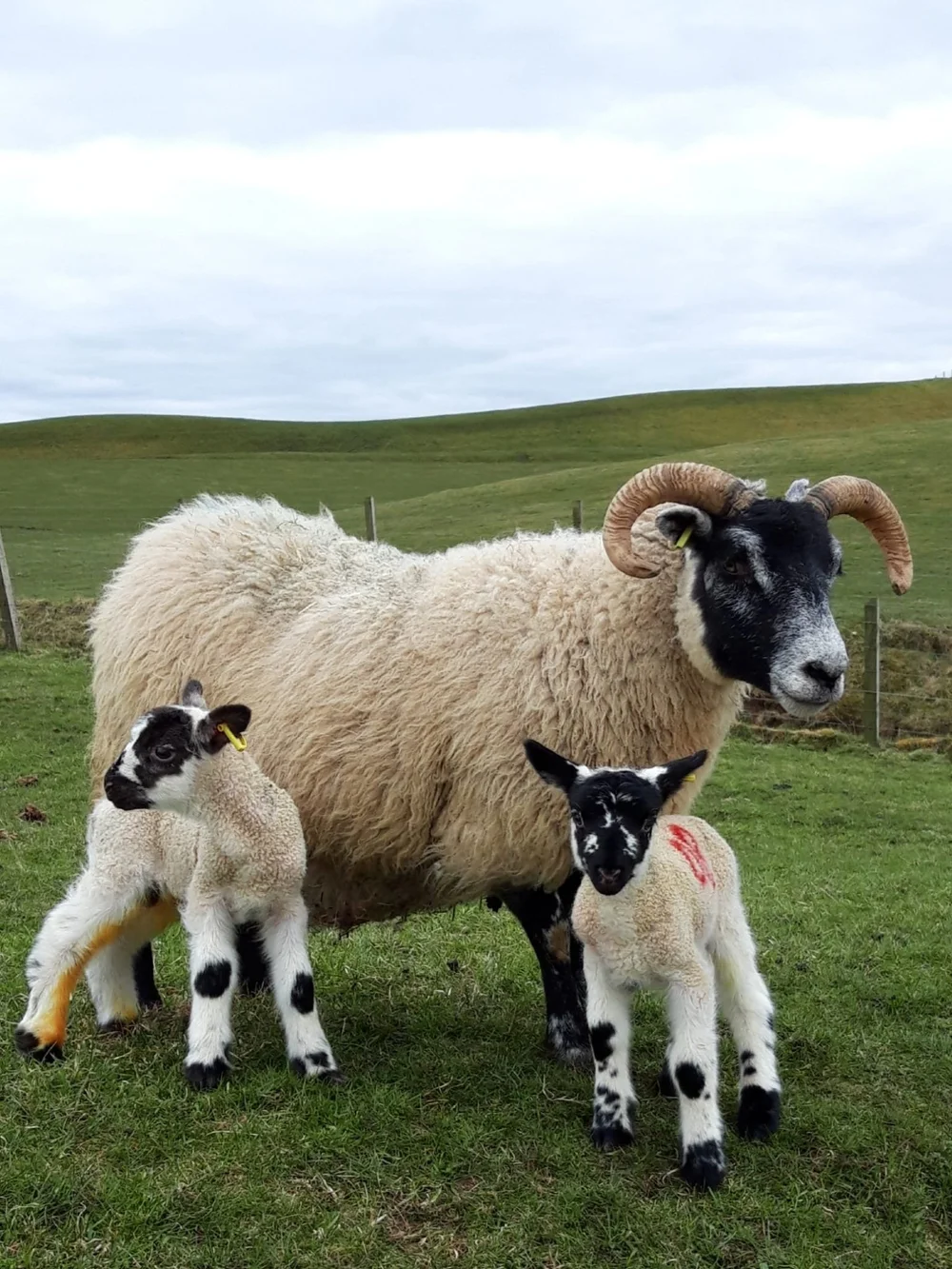
Pairs, Slaughter Tags and Replacements
Three questions decide a sheep tag order, and the counter will ask all three. Here they are in the order they come.
The Three Questions
New Run or Replacements?
A new run is a batch of fresh numbers for this year’s lambs. A replacement is a tag for an animal that has already been identified and has lost one.
New Run: Breeding Pairs or Slaughter Tags?
Breeding pairs are an EID tag and a visual tag with the same individual number and your flock mark printed on both; management information is optional. You choose the colour of both tags — yellow EID with a coloured visual, or the same colour on both, which Scotland allows. Slaughter tags are a single yellow EID tag printed with the flock mark only, for lambs leaving for slaughter.
Replacements: Double Red or Replicas?
If you do not know the individual number of the lost tag, the animal gets a double red pair — red EID and red visual — which is the colour the rules reserve for replacements. If you do know the number and the colour, a replica is an identical EID or visual tag printed with the original number.
Sheep Tag Ranges We Order
Every one of these is an approved sheep tag. Which one suits you comes down to the applicator you already have, the shape you find easiest to read, and the colours you want.
| Range | Maker | Worth knowing |
|---|---|---|
| Downland Trace | Downland, made by Datamars | EID twin tags and slaughter tags with their own applicator and replica tags; colour-matched pairs in the full run of colours. |
| TagFaster | Datamars | Strip-loaded pairs and slaughter tags, quick to apply at a gather. Colour-matched pairs available. |
| Z Tags for sheep | Datamars | The sheep version of the Z Tag; colour-matched pairs available. |
| Rubba | Datamars | Three soft tag shapes that can be mixed — a button EID with a flag visual, say — with the widest print space. |
| QWIKEiD | Allflex | Twin tags and slaughter tags in strips; the standard yellow-and-colour pair, with same-colour pairs in some colours. |
| Bubblegum | Allflex | A round EID paired with a Bubblegum or Babe visual; also a single slaughter tag. |
Colours, in plain terms. Yellow is the recommended colour for the EID tag across the UK, red is kept for replacements, and black is for sheep carrying an EID bolus. Beyond that, colour-matched pairs are available in white, light green, light blue, orange, pink, purple and yellow depending on the range — tell us the colour of each tag, not just the pair.
A Primary, a Secondary, and the Size Matters
Cattle carry two tags. The primary has to be a large or medium tag; the secondary can be any approved shape, including a button or an EID button.
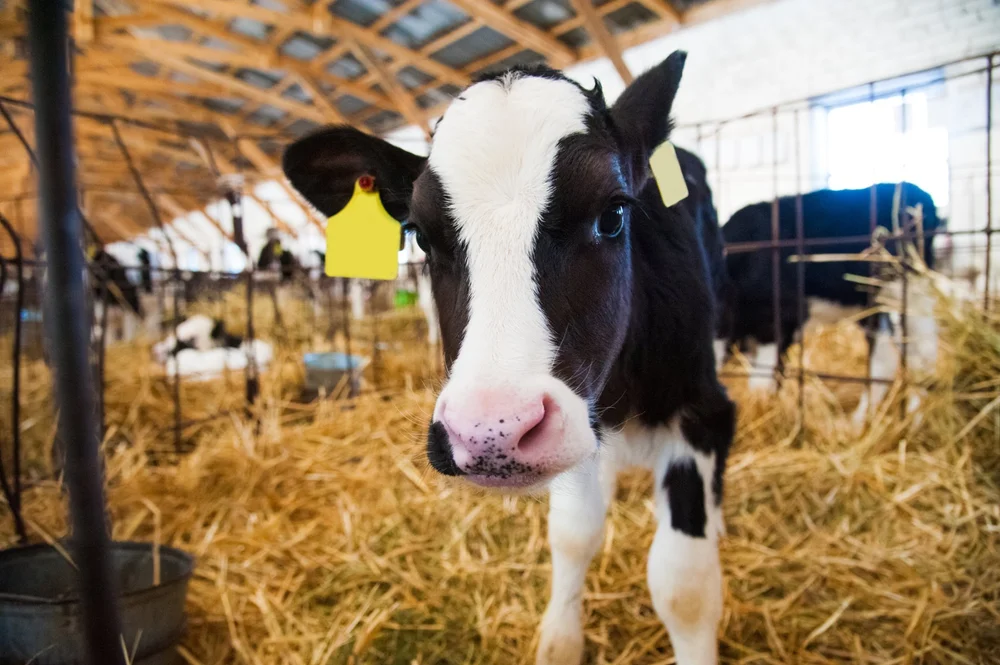
New Runs and Replacements
New run: the primary
Large or medium, yellow, printed with the crown, UK, your herd mark and the animal’s number. Large is easier to read across a shed; medium suits a calf’s ear.
New run: the secondary
Any approved type — a matching plastic tag, a button, an EID button or a metal tag. A management secondary carries the number plus whatever you want printed under it.
Replacements
Tell us the tag size, the herd mark with the UK in front, and the individual number. A replacement is printed with the same number as the tag that was lost.
Management tags
Printed too, not blank: every management tag carries a number, and the herd number prints without the UK. Order them with the run or on their own.
Cattle Tag Ranges We Order
| Range | Maker | Worth knowing |
|---|---|---|
| TraceTag | Datamars | Medium and large primaries with small, medium, large, management or FDX button secondaries, and a matching applicator. |
| Z Tags | Datamars | Medium and large primaries; small, medium and large secondaries; EID button secondaries in FDX and HDX. |
| Allflex Ultra | Allflex | Junior and Senior primaries with matching, button or management secondaries. |
| Ketchum metal | Ketchum | Tamperproof metal tags, approved as secondary cattle tags and ordered direct from Ketchum by the quantity of the run. |
Approval sits with the manufacturer, not the merchant. Cattle keepers order official tags from a DEFRA-approved manufacturer, and the three makers named here are on the approved list; McCaskie takes the order against your herd number and the tags come printed.
BVD Tags: the Test Goes in With the Tag
A tissue-sampling tag takes a small ear punch as it goes in, so the BVD test is done at tagging rather than as a separate handling.
We order tissue-sampling tags from Allflex and from Datamars (the Z Tag TST range) as official primaries or as management tags, with the sampling applicator that goes with them and the laboratory test booked alongside the tags. The sample is posted to the lab and the result comes back to you.
One thing to know before you order. A replacement tissue tag is only supplied where the tag itself was faulty. If a sample fails for any other reason, re-sampling is a job for your vet, so take care the punch is clean and the sample goes in the post promptly.
The Scottish Rules, Short Version
Quoted from gov.scot’s livestock identification guidance, both pages last updated 1 July 2026. Read the guidance itself before an inspection.
Cattle
Two tags, one in each ear
The primary is yellow plastic, at least 45mm high and 55mm wide, showing the crown, the letters UK and the animal’s unique number. The secondary can be metal, a button or another approved plastic type.
Dairy calves
At least one approved tag within 36 hours of birth. The second within 20 days.
Beef calves
Approved tags in each ear within 20 days of birth.
Lost or unreadable
Replace no later than 28 days after you notice, with the same number as the original.
Sheep
Adult sheep
Animals over 12 months carry two identifiers with the same unique individual number, and one of the two must be an electronic identifier.
When to tag
By nine months old, six if reared indoors, or when they leave the holding of birth — whichever comes first.
Colours
Yellow is recommended for the EID tag to match the rest of the UK. Red is reserved for replacement tags and black for sheep carrying an EID bolus.
Replacements
Recorded against the original individual number within 48 hours. The preference is the electronic tag in the left ear as you look from behind the sheep.
Sources: gov.scot, cattle and gov.scot, sheep and goats. Lambs going for slaughter have their own keeper guidance, which is why the counter asks whether a run is for breeding or for slaughter.
Applicators and Markers
Each manufacturer’s tags need that manufacturer’s applicator, and a worn or wrong applicator is the usual reason a tag does not stay in. Buy the pair together, keep the pins, and tell us which applicator you have when you order a new run so the tags match it.
The other half of identification on a sheep farm is the marker: Downland sheep marking aerosol and marking paste, and Ritchey Sprayline, are on the lambing page.
Ear Tag Questions
Can I buy official cattle ear tags from McCaskie?
Yes. Official tags are printed to order by a DEFRA-approved manufacturer against your herd number; McCaskie takes the order at the counter or through your rep and the tags arrive printed with your numbers.
What do I need to bring to order ear tags?
Your name and full address with postcode, a phone number, your herd or flock mark with the UK in front, your CPH holding number, and whether it is an account or cash sale. For replacements, the number and colour of the tag that was lost.
What is the difference between a new run and a replacement?
A new run is a batch of fresh numbers for animals that have never been tagged. A replacement is a tag for an animal already identified that has lost one, printed with the original number where it is known.
What are double red sheep tags?
A red EID and red visual pair used to replace lost tags when the animal’s original number is not known. Red is the colour the Scottish rules reserve for replacement tags. If you know the number and colour, a replica tag is printed instead.
What is a slaughter tag?
A single yellow EID tag printed with the flock mark only, for lambs that are leaving the holding for slaughter rather than being kept for breeding.
How soon does a calf have to be tagged in Scotland?
Dairy calves need at least one approved tag within 36 hours of birth and the second within 20 days. Beef calves need approved tags in each ear within 20 days of birth. That is gov.scot's guidance, updated July 2026.
What do I do if an animal loses a tag?
For cattle, replace it within 28 days of noticing, with the same number as the original. For sheep, record the replacement against the original number within 48 hours. Order the replacement through the store or your rep with the herd or flock mark and the number to hand.
Which ear tag brands do you supply?
Downland Trace sheep tags, Datamars (TraceTag, Z Tags, TagFaster and Rubba), Allflex (Ultra cattle tags, QWIKEiD and Bubblegum sheep tags) and Ketchum metal tags for secondary use, plus tissue-sampling BVD tags from Allflex and Datamars. Ask at the counter for what suits your applicator.
How long do ear tags take to arrive?
It depends on the manufacturer and the time of year, so ask when you order. Order ahead of calving and lambing rather than during them.
Bring the Numbers, and We Will Do the Rest
Have your herd or flock mark with the UK in front, your CPH number and the answers to the questions on this page to hand, and the order takes a few minutes at any of the four stores — Ayr, Kinross, Lanark & Stirling.
Rather do it by phone? Ring 01786 474 481 and we will take the details down. Or hand it to your rep on the farm and the tags come out to you. The wormers, vaccines and minerals that go on alongside the tags are on the cattle and sheep pages.