
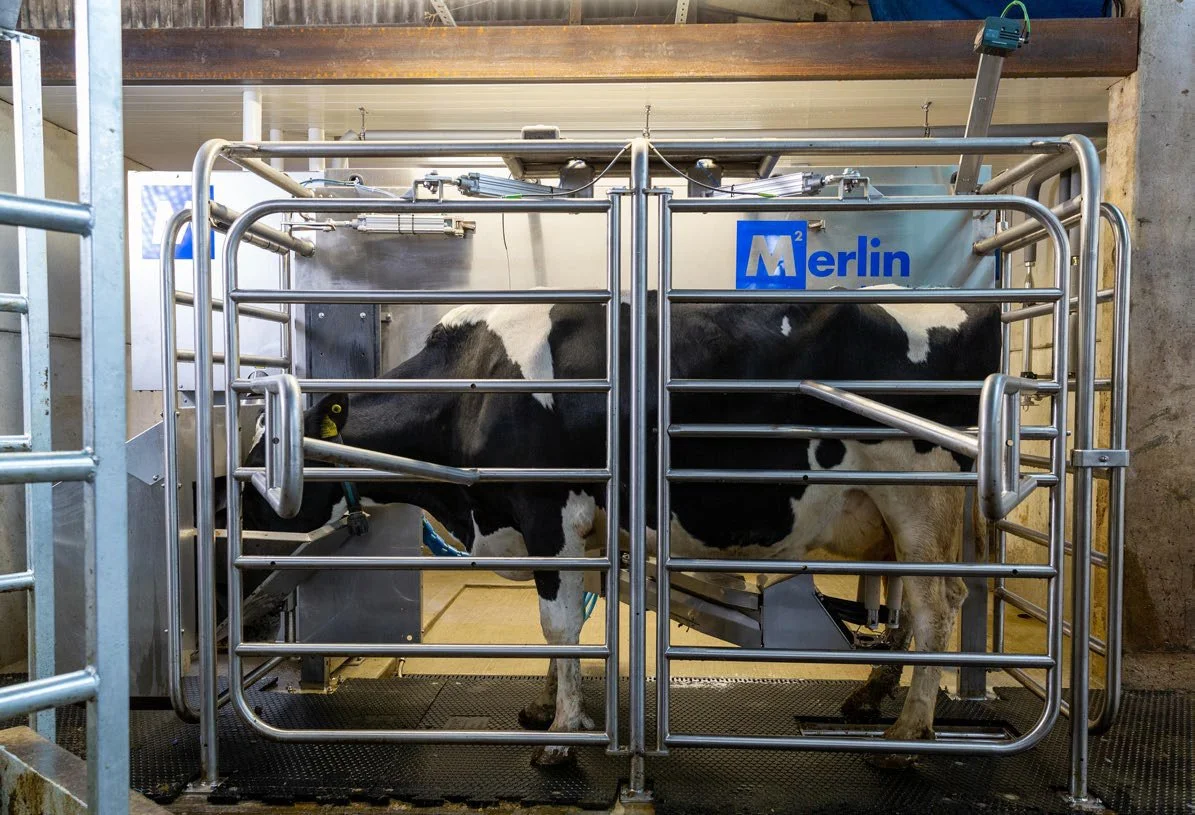
Robotic Milking in Scotland
The people who plan the layout, fit the robot and answer the phone at five in the morning are all ours, working from Stirling across the whole of Scotland.
Fullwood Build the Robot. We Do Everything Else in Scotland.
A milking robot is a fifteen-year decision, and most of what makes it a good one happens before and after the machine arrives: where it sits, how cows reach it, who commissions it, and who answers the phone when it stops at five in the morning.
As the leading Fullwood dealer in Scotland, McCaskie sells, installs and services Fullwood robots across the country. The engineering department is at Springkerse in Stirling, and the same team that draws your layout is the team that comes out to it afterwards.
One door, not three
The sale, the installation and the servicing come from the same engineering department. There is no version of this where the sale goes to a rep and the problems go to somebody else.
Scottish farms, Scottish engineers
Based at Springkerse in Stirling and out on farms across Scotland, rather than dispatched from the other end of the country.
We will tell you not to
If a parlour is the better answer for your set-up, we will say so and mean it — the robots we fit are the ones our own engineers service for years afterwards.
What Stands Behind That
Not a new line of business, and not a badge bought last year.
More than 10 years
Working with Fullwood. Long enough to have seen what lasts in a Scottish shed and what does not.
More than 90 robots
Merlin robots installed. Every one of them still has the same engineers behind it.
Eight engineers
Working out of Springkerse in Stirling. Not a subcontractor, not a rota shared with another region.
24/7 call-out
Twenty-four hours a day, seven days a week. A robot does not keep office hours, so neither does the phone.
Is a Robot Right for Your Shed?
Sometimes no. A robot suits some farms and some buildings and not others, and it is cheaper to find that out on a walk round than after a quotation.
The things that decide it are the herd and the building, not the machine: how many cows you milk and how hard the staff are to find; what you are milking through now and how much life is left in it; whether cows graze in summer; and whether there is somewhere to put a box where cows already walk, rather than somewhere they would have to be taught to go.
None of that needs a salesman to work out. It needs somebody who has stood in a lot of sheds.
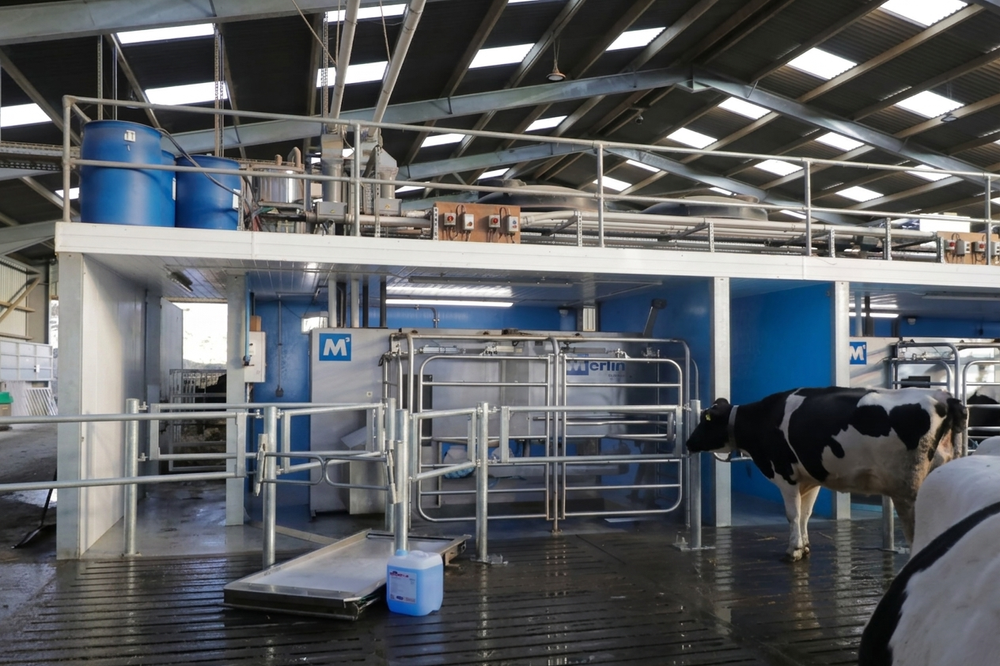
What We Look At When We Walk Your Shed
Free, and without obligation. An engineer comes out, walks the building with you and gives you a straight answer — including that a robot is the wrong answer, if that is what it is.
Cubicles and the feed face
Where cows already stand, lie and eat, because a robot has to fit the way they move now rather than the other way round.
The collecting yard
What it does today, and what it would do once cows come to the box when they choose instead of being fetched.
Water, power and drainage
What is there and what would need to change. We set out what is needed in writing; your contractor or ours does the work.
The route to and from the box
The walk a cow makes to be milked and the walk back, which is the single biggest thing that decides whether a robot fills its day.
Separating a cow
How you would draft one out for the crush, the straw pen or grazing without standing there waiting for her.
The floor at entry and exit
Level and grippy, or it will cost you milkings. Cows will not walk confidently onto a floor they do not trust.
How a Robot Goes In
Every farm is different, but the order never changes. We have deliberately left the timescales off this page — they depend on the building, the groundwork and the time of year, and a number invented to fill a gap is worse than no number at all. Ask us and you will get a real one for your farm.
1. The site visit
We walk the shed with you and give you a straight answer about whether robots suit the set-up. Free and without obligation.
2. The layout drawing
We draw the robot position and the cow traffic to scale — straight or side entry, straight or side exit, tandem, checkout or head to head. You get a drawing you can argue with, and most people do.
3. The quotation
In writing: the robot, the options you have chosen, the installation and the support that goes with it. No surprises bolted on later.
4. Services and groundwork
Power, hot and cold water to Fullwood's figures, drainage, a level grippy floor at entry and exit, and a dry, frost-free home for the control cabinet.
5. Installation and commissioning
Our own engineers fit the robot, connect FULLSENSE, link your cow identification and any sensors, and test-milk before a single cow goes through it in earnest.
6. Start-up
The first week is about the cows, not the machine. Cows learn the box faster when the people around it are calm — so we stay until they are.
The Drawing Is the Part People Underestimate
Two farms can buy the same robot and get very different days out of it, and the difference is almost always the layout rather than the box.
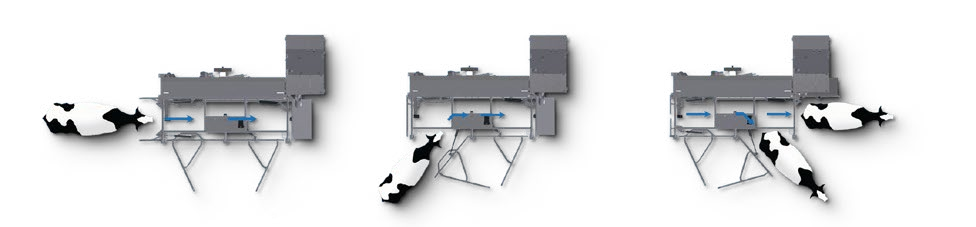
That flexibility is only worth something if somebody uses it properly, which is what the drawing stage is for. We design the system around your building — the layout, the traffic and the separation — rather than asking the building to suit the machine.
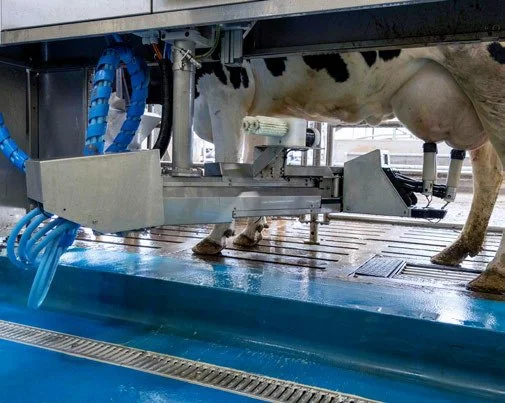
Who Looks After It Once It Is Milking
A robot milks around the clock, so the support behind it cannot keep office hours.
Two things, and you get both: routine maintenance planned in so the machine is looked at before it goes wrong, and call-out when something does — twenty-four hours a day, seven days a week, because a robot does not stop at five o'clock. Eight of our own engineers, from Springkerse in Stirling, with Fullwood's software updates reaching your farm through McCaskie rather than through a third party.
That covers the Merlins already milking on Scottish farms as well as the ones going in this year. A newer model arriving changes nothing about how yours is looked after — same engineers, same parts, same out-of-hours number, whatever the model.
Which Fullwood Robot, and Why
Three ways of milking with a Fullwood, and the right one depends on how you want your day to look rather than on which is newest.
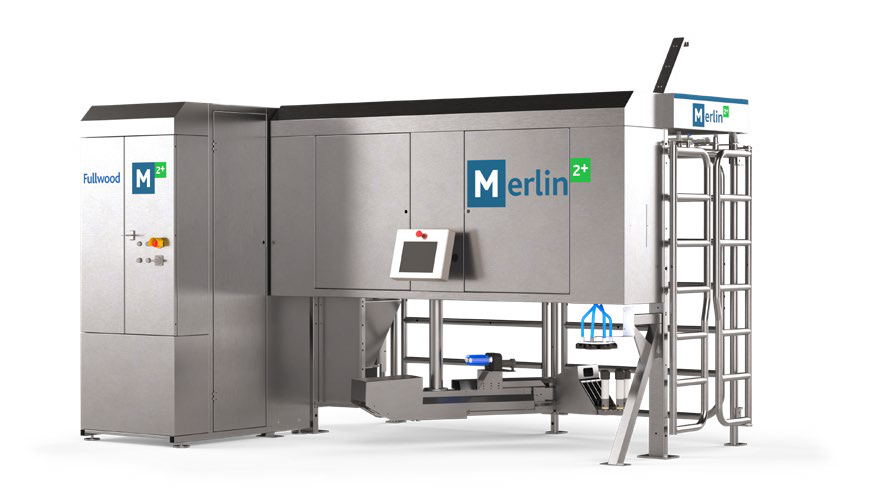
Merlin 2+
The newest robot in the Merlin line. Cows come when they choose, the box milks them and sorts them, and you get your mornings back.
Merlin Meridian
Fullwood's rotary. Robots milking in groups around a central waiting area, for farms that want milking to keep the shape of the day.
Already milking with a Merlin
An earlier Merlin is not a problem to be solved. We service it as usual, from the same base, with the same out-of-hours number.
Questions We Are Asked Most
Who installs milking robots in Scotland?
As the leading Fullwood dealer in Scotland, McCaskie installs Fullwood robots. Eight engineers work out of the department at Springkerse in Stirling, planning the layout, installing the robot, commissioning it and servicing it afterwards across the whole of Scotland. We have been working with Fullwood for more than ten years and have put in more than 90 Merlin robots.
Is my shed suitable for a milking robot?
Often yes, sometimes no, and the honest way to find out is a walk round. What decides it is the herd and the building — cow numbers, the route cows already take, whether they graze, and whether there is room for a box where cows already walk. The visit is free and without obligation.
What does a milking robot cost?
We will not put a figure on a web page, because it would be wrong for your farm. The number depends on how many boxes your herd needs, what groundwork the building wants and which options you choose. You get it in writing after the site visit.
What happens if the robot stops in the night?
You ring us, and somebody answers. The call-out runs twenty-four hours a day, seven days a week — our own engineers, out of Springkerse in Stirling, not an answering service taking a message for the morning.
Can cows still graze if we put robots in?
Yes, and plenty of Scottish farms do. It changes how the layout has to work — where the box sits, how cows come back in, how you draft them — which is one of the first things we go through on the visit.
What is the difference between a Merlin and a Merlin Meridian?
A Merlin box milks cows as they choose to come. The Meridian is Fullwood's rotary, milking groups around a central waiting area. Same dealership, same engineers, different shape of day.
Have an Engineer Walk Your Shed
McCaskie Engineering — 01786 474 481 · service@mccaskie.co.uk
4 Munro Road, Springkerse Industrial Estate, Stirling FK7 7UU · Monday–Friday 8am–5pm, and on call outside those hours.