
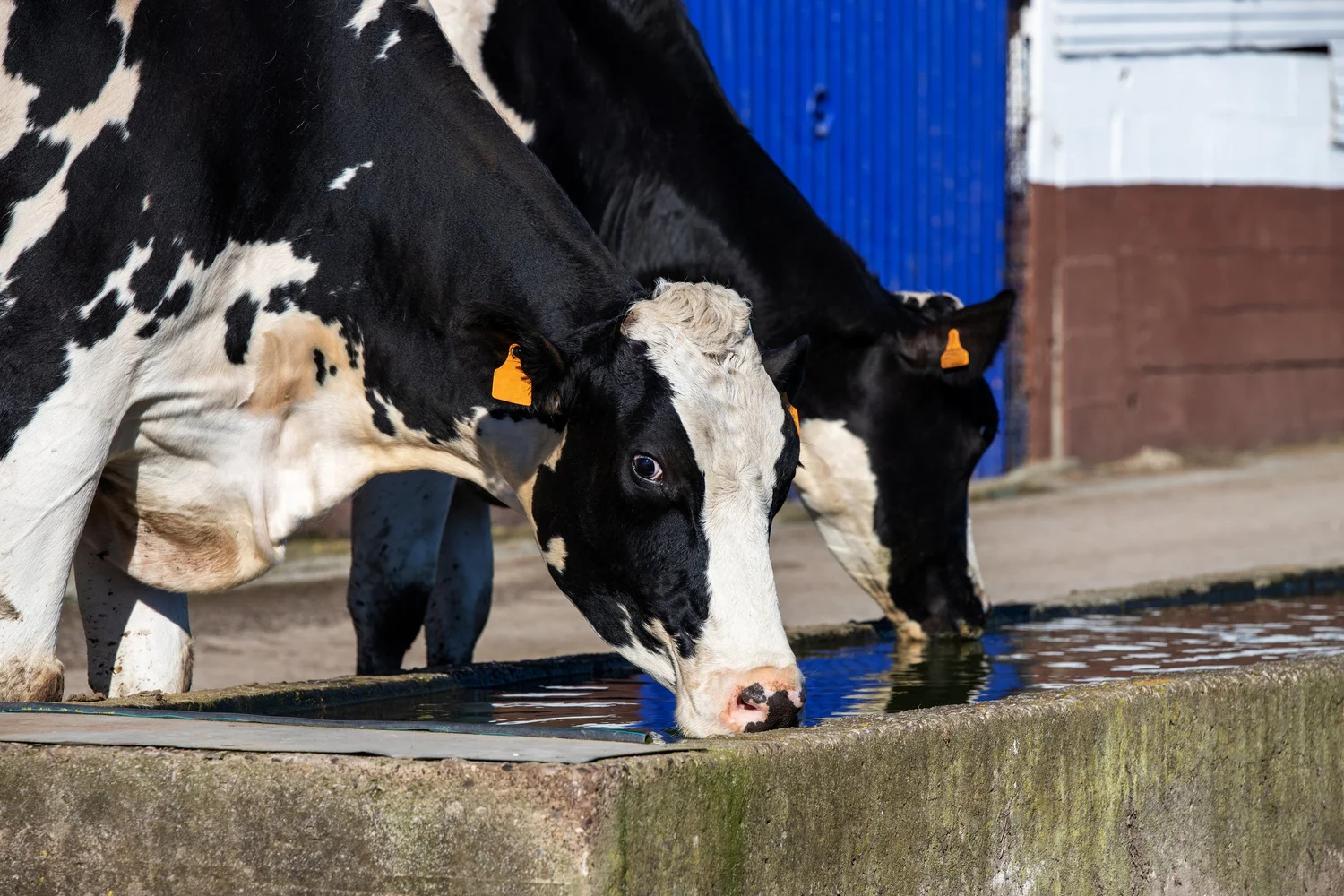
Water Troughs, Drinkers and Pipework for Livestock
Galvanised and plastic troughs, self-filling drinkers, Philmac fittings and MDPE pipe, over the counter at Ayr, Kinross, Lanark & Stirling. Water is the cheapest thing you feed and the first thing that limits intake when it runs short.
What Your Stock Actually Drink in a Day
There is no single figure for “a cow”, and using one is how troughs end up undersized. Intake follows milk yield, dry matter intake and the weather, and the gap between the top and the bottom of the range is five-fold.
| Class of stock | Water a day |
|---|---|
| High-yielding dairy cow | Around 150 litres |
| Beef cow at peak lactation | Under half the dairy figure |
| Dry spring calver on baled silage | About 30 litres |
Figures from Scotland’s Farm Advisory Service.
Dry matter is what drives it. Stock on dry forage and concentrate drink far more than stock on wet silage or lush grass, because they are not getting the water in the feed. The same shed can go from comfortable to short in a fortnight without the ration changing much on paper.
It is not the daily total that catches people out, it is the peak. A cow can drink at up to 14 litres a minute, and they come to the trough together — after milking, after feeding, when the sun comes out. A trough that holds a day’s water is no use if it cannot refill between two batches.
What We Keep
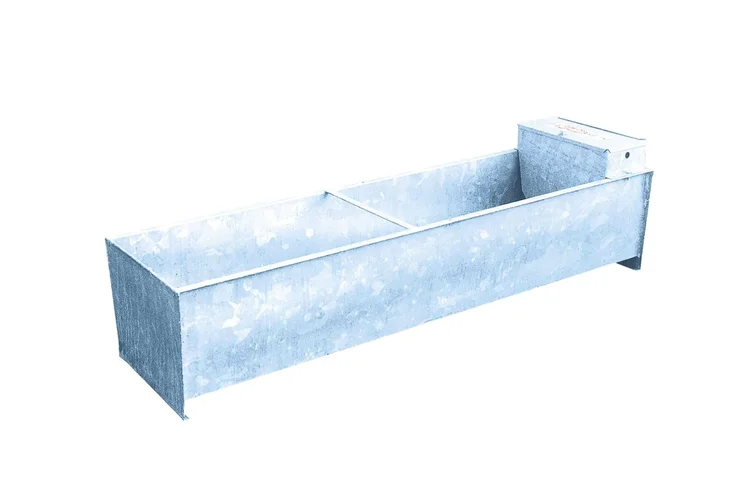 Ritchie Galvanised Water Trough
Shallow and deep models. Hot-dip galvanised steel, made in Forfar.
Ritchie Galvanised Water Trough
Shallow and deep models. Hot-dip galvanised steel, made in Forfar.
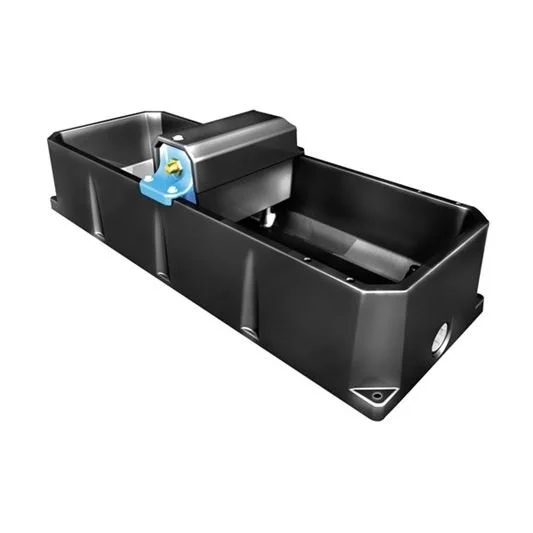 Paxton WT75-R Rectangular Trough
75 litres. 1,190 × 430 × 340mm, UV-stabilised MDPE, ballcock and 50mm drain plug fitted.
Paxton WT75-R Rectangular Trough
75 litres. 1,190 × 430 × 340mm, UV-stabilised MDPE, ballcock and 50mm drain plug fitted.
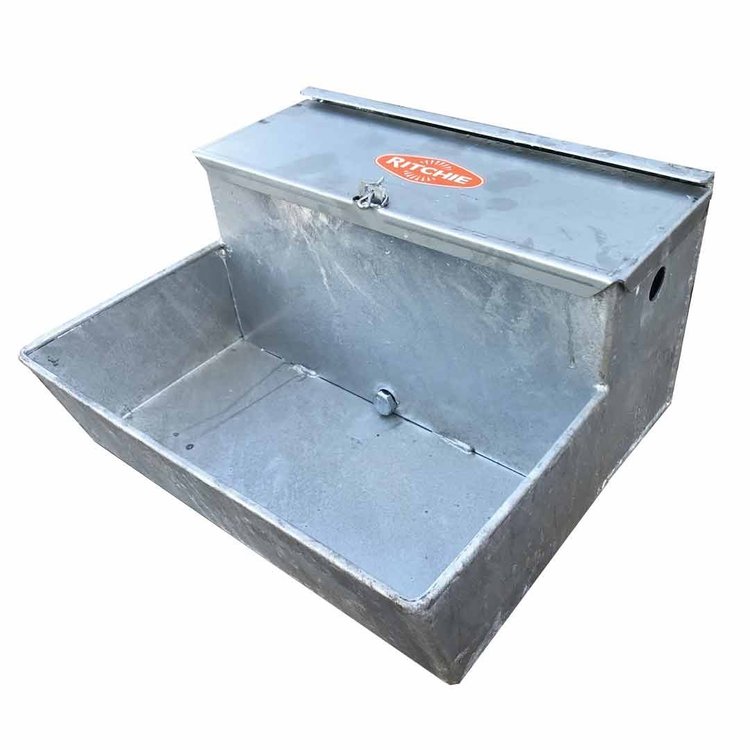 Ritchie All Purpose Drinker
Galvanised steel, lidded ballcock chamber. For cattle, sheep and horses.
Ritchie All Purpose Drinker
Galvanised steel, lidded ballcock chamber. For cattle, sheep and horses.
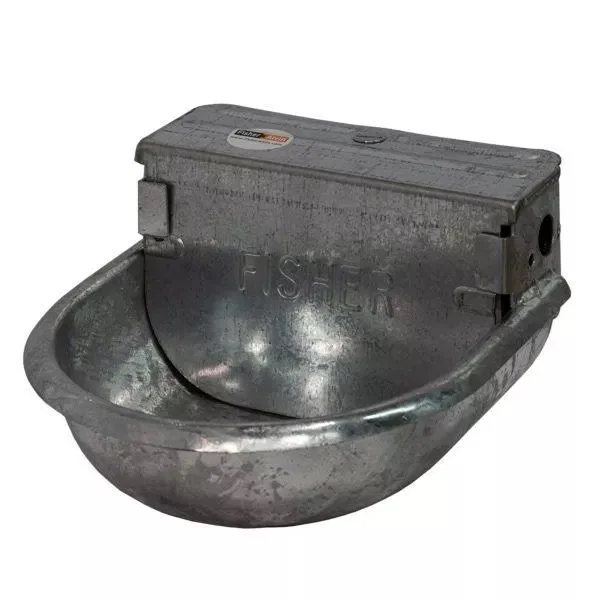 Fisher Alvin Drinker Bowl
Self-filling galvanised bowl. Cattle, horses and sheep.
Fisher Alvin Drinker Bowl
Self-filling galvanised bowl. Cattle, horses and sheep.
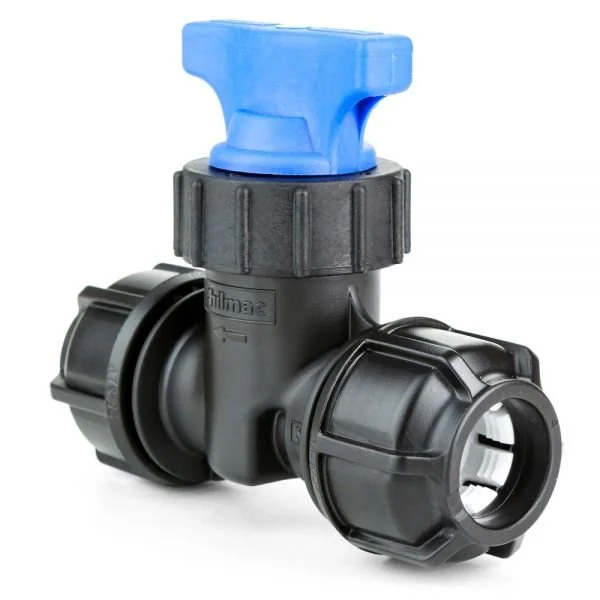
 Philmac Compression Fittings
3G Metric/Imperial, 20mm to 63mm. UTC transition couplings, 15mm to 61mm.
Philmac Compression Fittings
3G Metric/Imperial, 20mm to 63mm. UTC transition couplings, 15mm to 61mm.
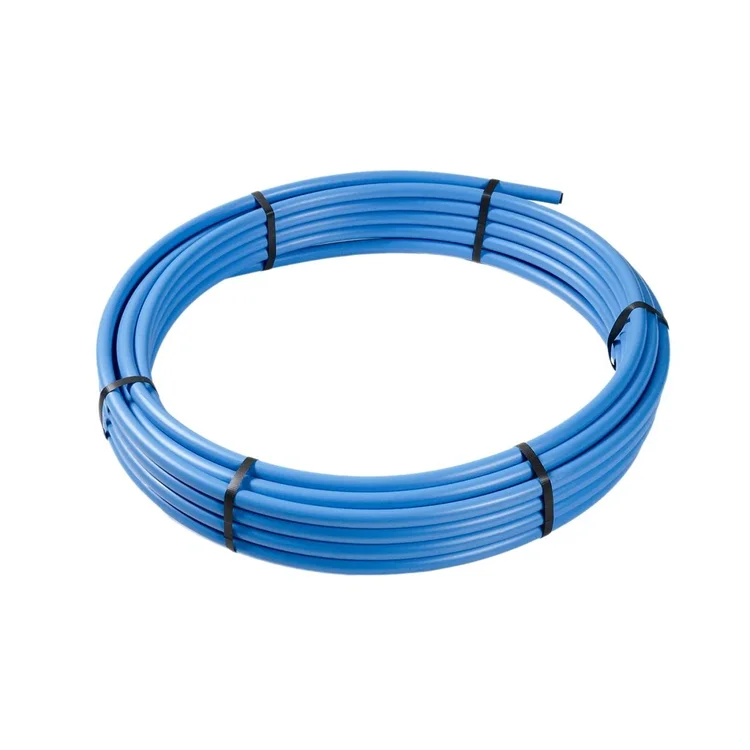 Polypipe MDPE Water Pipe
Medium density polyethylene coil. Flexes rather than splits when it freezes.
Polypipe MDPE Water Pipe
Medium density polyethylene coil. Flexes rather than splits when it freezes.
Sizes, models and stock vary by store. Ring before you travel and we will have it ready.
Galvanised or Plastic?
Both last. They fail differently, and that is the thing to decide on.
Hot-dip galvanised steel takes rough treatment from big cattle and will not distort in the sun. It is the heavier option to shift and the one to watch for a knocked seam. Ritchie have been making them at Forfar since 1870 — the company started as the smithy at Gateside and now runs a 14-acre site outside the town. Their range covers shallow and deep troughs, the shallow ones from 610mm up to 1,830mm long and the deep ones from 910mm to 2,440mm.
UV-stabilised polyethylene is light enough for one person to reposition, has nothing to rust and nothing to freeze onto, and cleans out easily. It is the one to choose for paddock grazing and for anywhere a trough gets moved. Paxton, part of Leafield Environmental, mould the WT-R range; the WT75-R holds 75 litres in 1,190 × 430 × 340mm, with a removable service box cover over the ballcock, bolt-down points and a 50mm drain plug as standard.
Self-Filling Drinkers
Where a trough is the wrong shape for the space — a tie stall, a loose box, the end of a pen — a bowl drinker does the same job in a fraction of the footprint. Ritchie’s All Purpose Drinker is galvanised with the ballcock under a hinged lid, so it suits cattle, sheep and horses without modification. Fisher Alvin have been making drinkers in Birmingham since 1912 and their galvanised bowls are the ones most people picture when they say “drinker”.
Pipe, Fittings and Valves
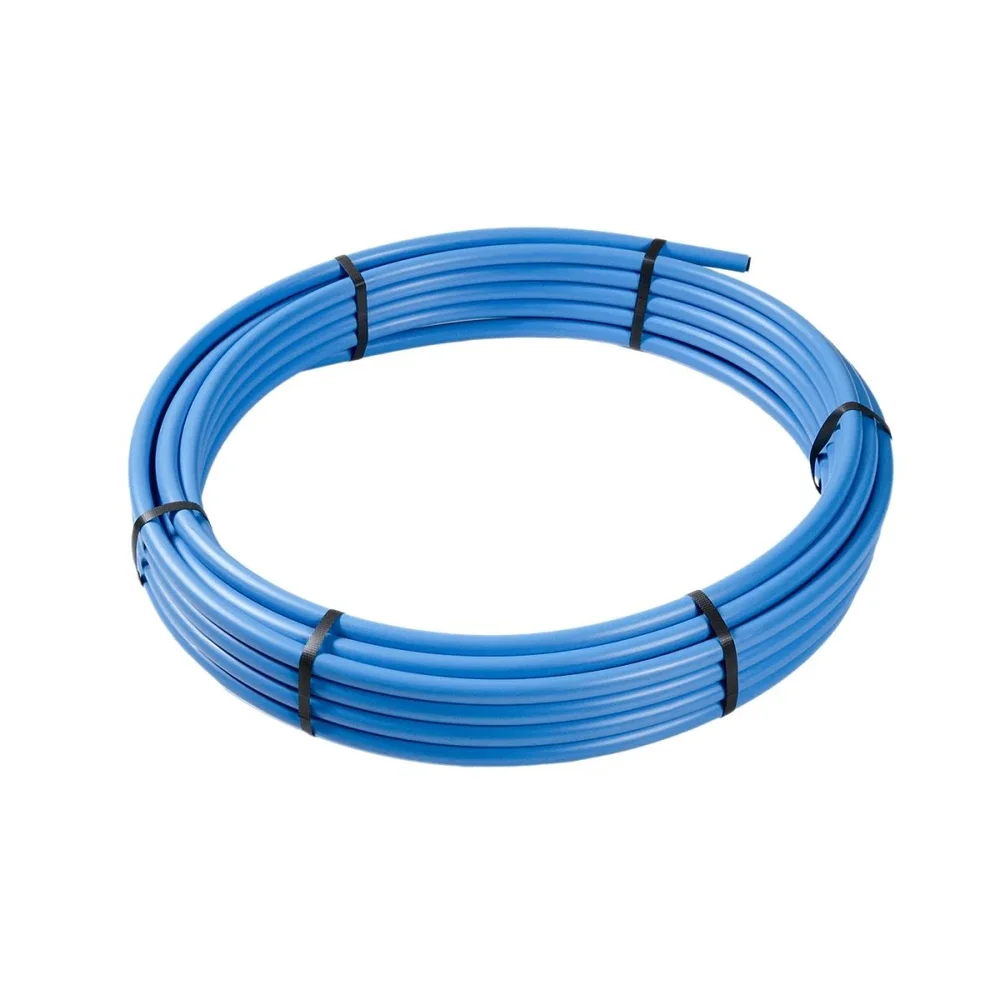

Polypipe MDPE
Medium density polyethylene rather than semi-rigid PVC, for one reason that matters in a Scottish winter: it flexes. Water expanding in an MDPE main tends to stretch the pipe where it would split PVC, and a pipe that survives the frost is a pipe you are not digging up in February.
Philmac Fittings
Philmac is the fittings range we keep, and the part worth knowing is the UTC Universal Transition Coupling: it joins PVC, copper, galvanised iron, ABS, lead, stainless steel and polyethylene without adapters or modification, anywhere from 15mm to 61mm. On a farm where the water main has been extended four times over sixty years and nobody is sure what is buried where, that is the fitting that gets you out of trouble.
The 3G Metric/Imperial compression range covers 20mm to 63mm and is rated to 16 bar. The whole range is WRAS-approved for drinking water. One caveat on the pressure figure, because it gets quoted loosely: 16 bar is the 3G, EasyLOK and BSP threaded rating. The UTC is rated to 12.5 bar and the valves to 14 bar. If pressure is the deciding factor on your system, check the rating for the specific fitting rather than the range.
Getting the Installation Right
| Flow rate | Ideally more than 10 litres a minute into the trough, because a cow can drink faster than that |
|---|---|
| Water depth | About 3 inches (75mm) is the working figure; on a dairy unit the depth should not exceed 12 inches (300mm) |
| Trough space, dairy | 15cm per cow is the Farm Advisory Service figure. AHDB size it differently — 70cm for each cow at the trough, with room for a tenth of the herd to drink at once |
| Trough space, beef | 2.5cm per head, or roughly 3 feet of trough to a pen of about 35 |
| Rim height | 75cm (30in) above the standing surface |
| Walking distance at grass | No more than 250m to water |
| Passing room | At least 3.6m behind a drinking cow, so two more can pass |
Two bodies, two trough-space figures. The Farm Advisory Service works per cow in the herd; AHDB works per cow standing at the trough with a tenth of the herd drinking at once. They do not give the same answer, and where they differ the larger trough is the one nobody regrets. If you want it sized properly for your shed, bring the cow numbers and we will work through it.
Clean out what the figures assume. Every number above assumes the stock will drink. Algae, a skin of silage effluent or a fouled trough will cut intake before any of this matters, and a drain plug you can actually reach is worth more than a litre of capacity.
Bring your stock numbers, your shed layout or a photograph of the fitting you are trying to match to any of the four stores, or ring 01786 474 481. If it is a whole system rather than a trough, ask for your representative and let him see the ground.
Ask your rep about troughs and pipeworkLivestock Water Questions We Get Asked
How much water does a cow drink in a day?
It depends entirely on what she is doing. Scotland's Farm Advisory Service put a high-yielding dairy cow at around 150 litres a day, a beef cow at peak lactation at under half of that, and a dry spring calver on baled silage at about 30 litres. Stock on dry forage drink far more than stock on wet silage, because they are not getting water in the feed.
What flow rate does a livestock water trough need?
More than 10 litres a minute is the figure to aim for. A cow can drink at up to 14 litres a minute, and stock come to the trough in batches rather than one at a time, so refill rate matters as much as the volume the trough holds.
How much trough space per cow?
There are two figures in circulation because they are measured differently. The Farm Advisory Service works on 15cm per cow in the herd for dairy and 2.5cm per head for beef. AHDB works on 70cm for each cow actually standing at the trough, sized so a tenth of the herd can drink at once. Where they disagree, the larger trough is the safer choice.
How high should a water trough be?
AHDB put the rim at 75cm, or 30 inches, above the surface the cow is standing on. Water depth of about 3 inches is the working figure, and on a dairy unit it should not go beyond 12 inches.
Galvanised or plastic water troughs — which is better?
Neither, in general. Hot-dip galvanised steel takes rougher treatment and holds its shape, so it suits permanent siting and big cattle. UV-stabilised polyethylene is light enough to move single-handed, has nothing to rust and is easier to clean out, so it suits paddock grazing and anywhere a trough gets shifted.
Why use MDPE pipe instead of PVC for a water supply?
Because it flexes. Medium density polyethylene tends to stretch where semi-rigid PVC splits, so a frozen main is far less likely to need digging up. That matters more in central Scotland than the price difference between the two.
Can I join old galvanised or copper pipe to new poly pipe?
Yes. The Philmac UTC Universal Transition Coupling joins PVC, copper, galvanised iron, ABS, lead, stainless steel and polyethylene without adapters, from 15mm to 61mm. Bring a photograph or a short offcut to the counter and we will match it.
Where can I buy livestock water troughs in central Scotland?
From any of the four McCaskie country stores, at Ayr, Kinross, Lanark & Stirling. Sizes and models vary by store, so ring 01786 474 481 before you travel and we will have it ready, or ask your representative to bring it out.