
Faecal Testing, Done in the Store
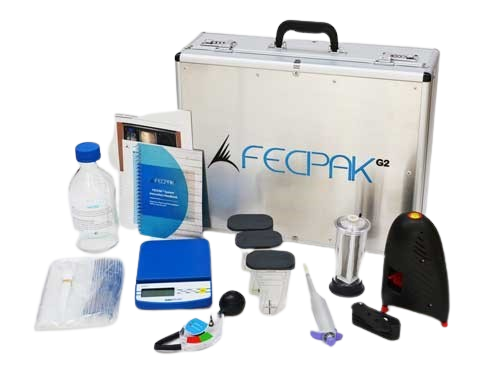
Bring a dung sample in to Kinross and we run it on a FECPAKG2, or to Ayr and we run it on a Micron Agritech — worm egg counts at both, fluke and coccidia at Ayr. You get a number to drench on instead of a date in the diary, and somebody qualified to tell you what it means.
Treat on the Count, Not the Calendar
Scheduled drenching treats every animal whether it needs it or not. That costs money on product you did not need, and it costs something harder to replace: every unnecessary dose is selection pressure on the worms that survive it. Resistance is not a future problem on Scottish sheep farms.
A worm egg count tells you whether there is a burden worth treating, in which group, and — done again afterwards — whether the drench you used actually worked. That last one is the test most farms have never run, and it is the one that finds resistance before it finds you.
Where to Bring It
Two of the four stores run tests, on two different systems. You do not need to own either of them.
| Store | System | Tests for | Price |
|---|---|---|---|
| Kinross | FECPAKG2 | Worm egg counts | Call for pricing |
| Ayr | Micron Agritech | Worms, liver fluke and coccidia | Call for pricing |
Ring the store before you set off. A count is usually turned round the same day, but only when trained staff are on, and the store you are driving to is the one that knows who is in today — Kinross on 01577 840 272, Ayr on 01292 262 576. That call is the difference between driving home with a number and driving home without one.
What the Two Systems Do
FECPAKG2, at Kinross, is an image-based counting system rather than a microscope. The sample is photographed and the image is sent for analysis, so the picture survives the test instead of going down the sink — which is what makes the result auditable when it goes into a health plan or a resistance record. It is validated for worm egg counting across cattle, sheep, horses, goats and camelids.
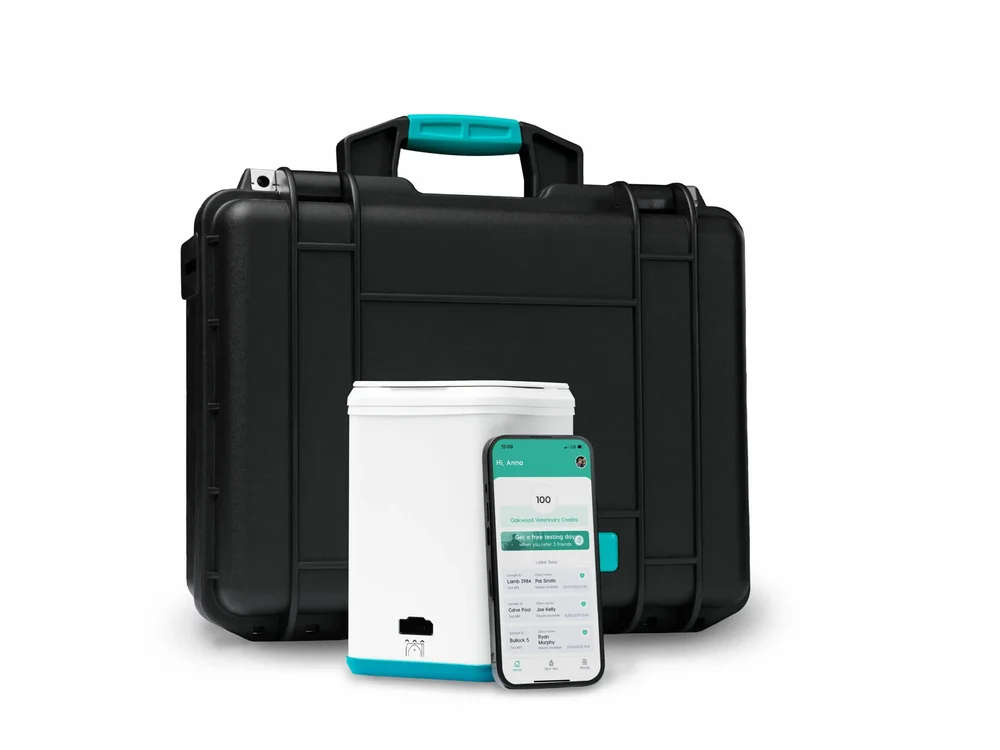
Micron Agritech, at Ayr, films the prepared slide in a reader and reports gastrointestinal worms, coccidia and liver fluke depending on the species, across cattle, sheep and horses. On wet Ayrshire ground fluke is the bigger question for a good part of the year, which is why that system sits at Ayr. Micron publish results from VetQAS proficiency testing — the Veterinary Quality Assurance Scheme — comparing the system against participating laboratories, and report scores close to the consensus value. That is a recognised external scheme rather than a marketing line, and it is the strongest thing that can fairly be claimed for it.
Either way the shape of the visit is the same:
| Posting samples to a lab | Bringing them to the counter | |
|---|---|---|
| Turnaround | Days, and the post | Usually the same day |
| What survives | A figure on a sheet | The image, kept and reviewable |
| Who reads it to you | Nobody — it arrives in the post | An SQP, at the counter, there and then |
| What happens next | You decide on your own | The product is on the shelf behind you |
The count is the easy part. What to sample, from which group, at what point in the season, and what to do with the number — that is the bit worth a conversation, and it is why the test sits at a counter with an SQP behind it rather than in an envelope. Every one of our representatives is an SQP too, so a count can be built into a farm visit.
What Happens to Your Sample
You Bring It In
A fresh sample, collected the same day, kept cool and airtight, and kept separate per management group rather than pooled. Tell us at the counter what the group is, how old they are, what they were treated with last and when, and what you are seeing in them. That is what turns a number into a decision.
We Prepare It
The sample is made up at the counter with the system’s own consumables. That is the part that takes the time — a few minutes of the cycle at either store.
It Is Imaged, Not Eyeballed
At Kinross the FECPAKG2 photographs the prepared sample; at Ayr the Micron reader films the slide. In both cases the analysis works from an image rather than somebody at a microscope, so the picture survives the test instead of going down the sink.
You Get a Report, and a Conversation
The result comes back as a report you can keep, send on, or put into a health plan. Micron put their whole cycle at under ten minutes once it is under way. The more useful part is the two minutes after it, with an SQP, deciding what the number means for that group.
Count again after you treat. A drench that has not brought the number down the way it should is the first sign of resistance on your farm, and it is far better found on your terms than in a bad year. Ask at the counter when to take the second sample — it depends on the active. A count is one input; which group, which active and when to re-test is the conversation to have with an SQP or your vet.
Faecal Testing Questions
What is a faecal egg count and why do one?
It is a count of worm eggs in a dung sample, used to decide whether a group actually needs drenching and, repeated afterwards, whether the drench worked. Treating on a count rather than a calendar saves product and slows resistance.
Where can I get a worm egg count done in central Scotland?
At two of the four McCaskie stores. Kinross runs worm egg counts on a FECPAKG2 and Ayr runs worm, fluke and coccidia tests on a Micron Agritech — bring a fresh dung sample in and we do it for you, so you do not need to own a kit. Ring the store first — Kinross on 01577 840 272, Ayr on 01292 262 576 — because it needs trained staff on that day.
What does a faecal test cost at McCaskie?
Ring 01786 474 481 for current pricing at either store. It is charged per test, and the number you get is the one to drench on — or not.
How long does it take to get the result?
Usually the same day, provided trained staff are in. Ring the store you are travelling to first and we will tell you whether it can be turned round while you are there.
How should I collect and store the sample?
Fresh, collected the same day, kept cool and airtight until it reaches us, and kept separate per management group rather than pooled across the whole flock. Heat and air are what spoil a count.
Which animals can FECPAKG2 be used on?
It is validated for faecal egg counting across species including cattle, sheep, horses, goats and camelids such as alpacas.
What does the Micron system at Ayr test for?
Gastrointestinal worms, coccidia and liver fluke, depending on the species. It covers cattle, sheep and horses, and fluke is the reason it sits at Ayr.
How do I know if my wormer still works?
Count before treating and count again afterwards. A drench that has not brought the count down the way it should is the first sign of resistance, and it is worth finding out on your terms rather than in a bad year. Ask an SQP to set the timing with you.
Ask at any of the four stores — Ayr, Kinross, Lanark & Stirling — or ring 01786 474 481. There are qualified SQPs in every store.
Ask your rep about counting