
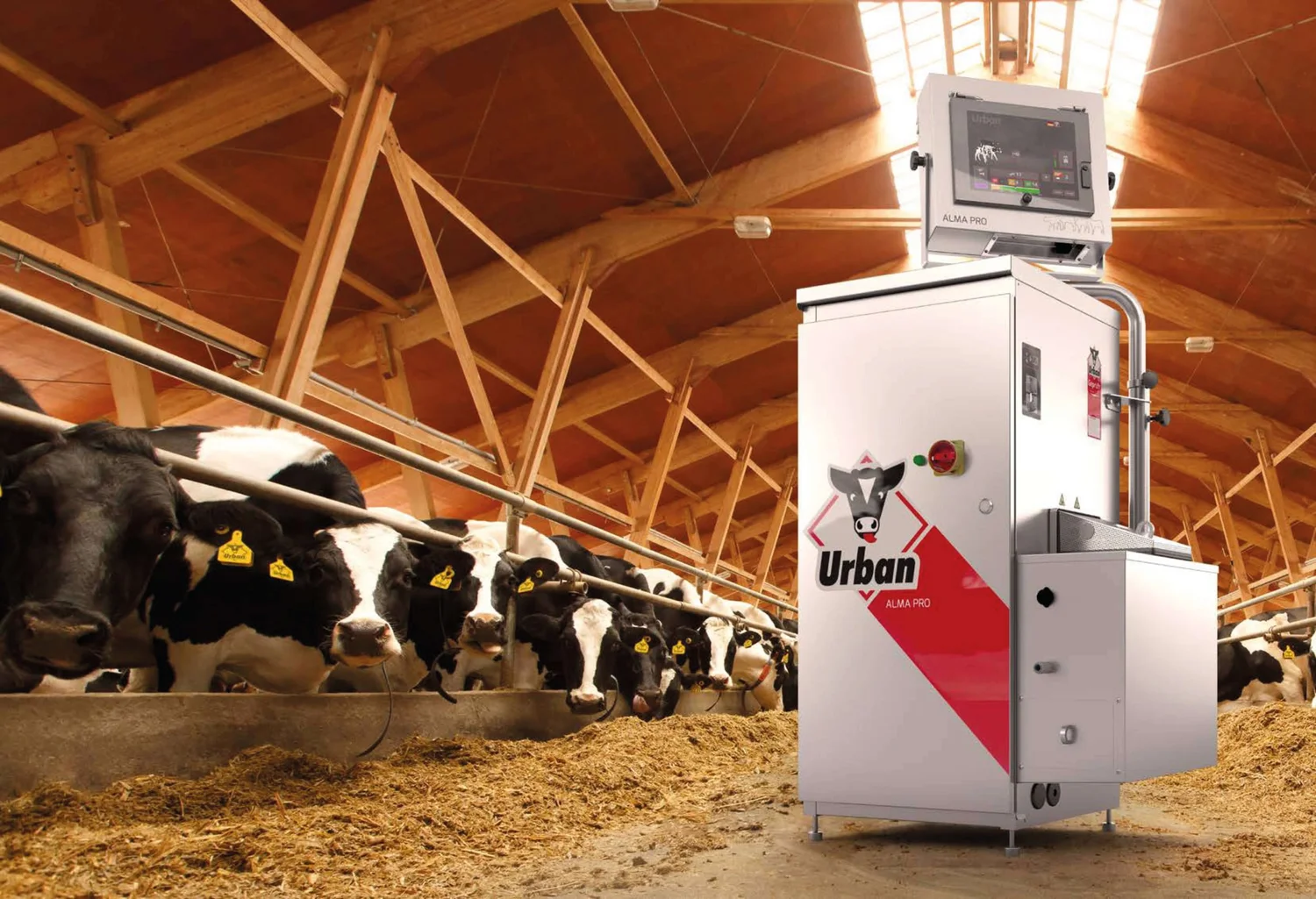
Urban Automatic Calf and Lamb Feeders
Every animal fed the amount it is due, little and often, around the clock — quoted on farm, installed by our engineers and serviced afterwards.
Bucket Feeding Is Two Meals. A Calf Wants Six.
Left to herself, a calf on the cow drinks little and often through the day. Bucket rearing gives her a large meal twice, because that is what a person has time for.
That is the whole argument, and it is not really about technology. An automatic feeder can offer small feeds spread through twenty-four hours because nobody has to be standing there for any of them, and it can give each individual animal a different allowance on a different curve — the strong heifer calf and the small one that came a fortnight early are not on the same plan.
The second argument is the one farmers raise first: the labour. Carrying and rinsing buckets and mixing batches is an hour or more of somebody every day at the busiest time of the year, and it is the job that gets rushed when everything else is happening. Urban make the case for growth and welfare in their own terms; we would put the labour first, because that is the part you will feel in the first week.
Urban Alma Pro
One machine, up to four feed stations, up to a hundred calves.
Up to 100 calves
Across up to four stations, so the machine can serve more than one pen or more than one shed without a second unit.
55kg powder container
Holds a bag and then some, so filling it is a job you do when you are passing rather than a job that interrupts you.
One metre square
The footprint is 1m x 1m, and the machine itself is 0.8m wide, 1.62m high and 0.7m deep. It fits in a corner of a shed rather than needing a room built for it.
Every calf on her own plan
Each animal gets the exact allowance set for her, on the feed curve set for her, identified at the station rather than by whoever is on.
When she last drank
The screen tells you which calf has not been, and when she last came. A calf going off her milk is the earliest sign you get of anything wrong.
On the phone as well
The same information is on a mobile device as on the display in the shed, so it reaches whoever is not in the shed at the time.
The Calf You Would Not Have Noticed Until Thursday
The useful part is not the feeding. It is knowing which animal did not come.
In a bucket system a calf that is off her milk is discovered when somebody notices a full bucket, and only if that somebody is paying attention on that morning. On a feeder, the animal that has not drunk is on a list before anybody walks into the shed, with the time of her last visit and how much she took.
That is a day or two of warning on almost everything that goes wrong with a young calf, and a day or two is the difference between a cheap problem and an expensive one. It is not a diagnosis and it does not replace your vet — it tells you which pen to walk into first.
Milk temperature is recorded at every feed too, which quietly removes one of the commonest causes of scour in a hand-fed group: milk mixed at the wrong temperature because the kettle was doing something else.
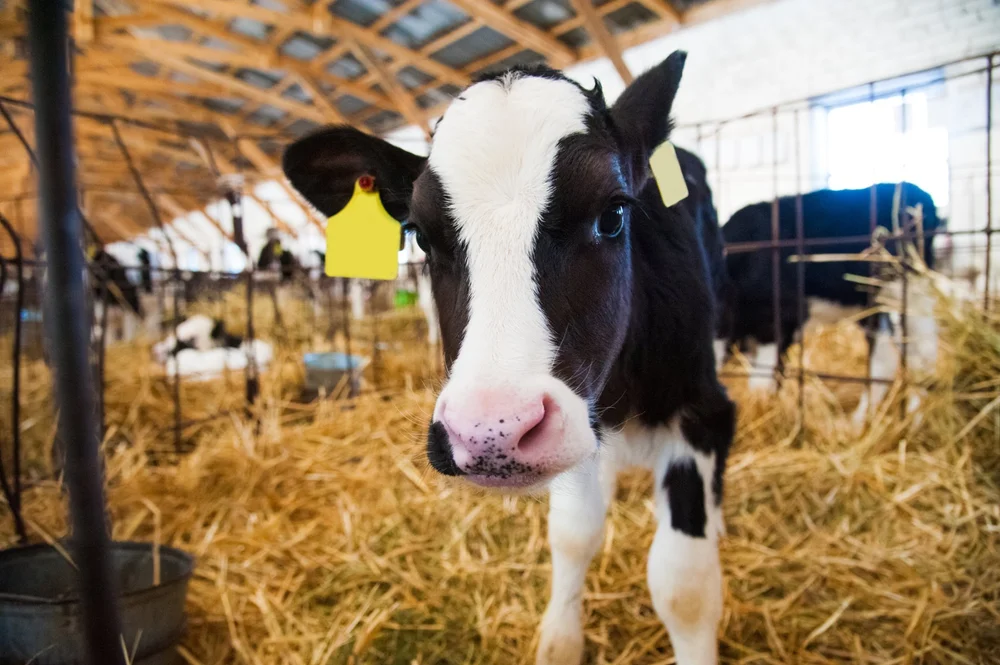
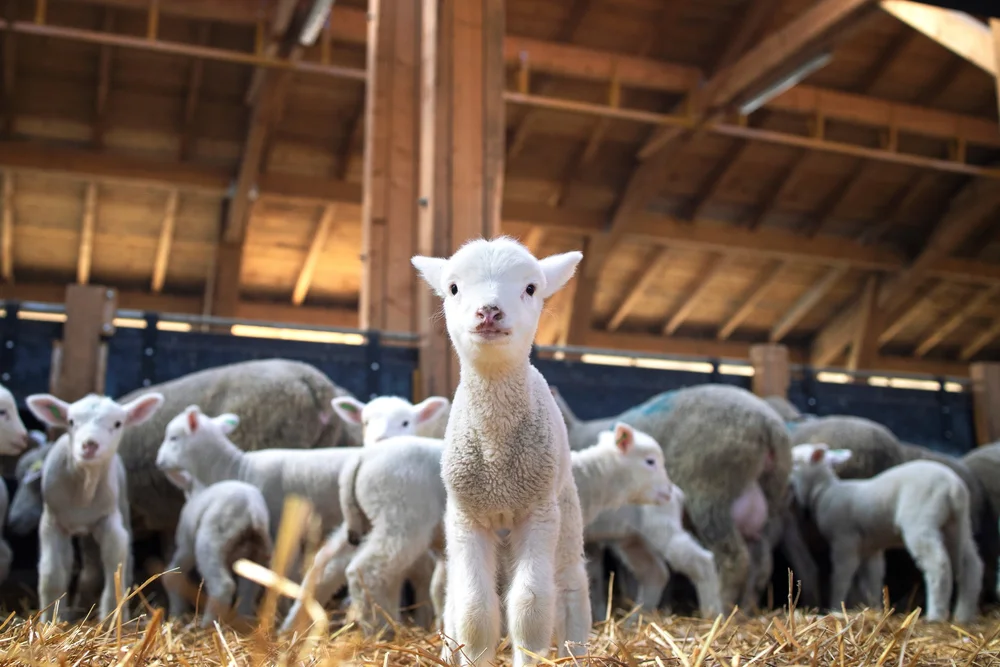
Alma Pro L — Up to 240 Lambs
The same machine and the same idea, built for lambs and kids.
Pet lambs are the job that eats a lambing. Triplets, a ewe with no milk, a ewe that dies — and every one of them is a bottle, several times a day, for weeks, at exactly the point in the year when nobody has a spare hour.
The Alma Pro L takes up to 240 lambs across four stations, in the same footprint as the calf machine and with the same 55kg container. Each lamb or kid gets the amount set for it, and the same individual record — how much it is drinking, when it last drank, and the temperature the milk went in at.
Scotland is a sheep country and almost nobody sells this side of it properly. If you are rearing pet lambs in any number, it is worth asking about before next lambing rather than during it.
A Fitted Install, Not a Delivery
This is quoted on the farm, installed by our own engineers and serviced afterwards — the same way we put in a robot.
A feeder needs water, power and a place to stand where the milk line runs are short and the stations sit where the calves already are. Long teat lines are the usual reason an automatic feeder disappoints: milk cools on the way and the machine gets blamed. So somebody comes and looks at the pens, the water, the power and the way you are working before anybody quotes a machine.
On the farm first
What suits a year-round calving herd is not what suits a block calver, and what suits a pet lamb shed is different again.
Fitted by our own engineers
Eight engineers, working from Springkerse in Stirling and a second service centre at Ayr. The people who install it service it.
Supported around the clock
Covered by the same twenty-four hour, seven day call-out as every other machine we install. A feeder down in the middle of calving is not a Monday morning problem.
Milk replacer itself is a country store line rather than an engineering one — the Downland range and the big names alongside it, at Ayr, Kinross, Lanark & Stirling.
Ring Stirling on 01786 474 481 or email service@mccaskie.co.uk. Service and call-out.
Calf and Lamb Feeder Questions
How many calves will an automatic feeder take?
An Urban Alma Pro feeds up to 100 calves across up to four stations, so one machine can cover more than one pen or shed. Whether four stations is right for your numbers depends on your calving pattern more than your herd size — a block calver has a very different peak from a year-round herd.
Who installs automatic calf feeders in Scotland?
McCaskie. It is a fitted installation rather than a delivery: we quote it on the farm, our own engineers install it, and the same engineers service it. We work from Springkerse in Stirling with a second service centre at Ayr, and call-out runs twenty-four hours a day, seven days a week.
Is there an automatic feeder for pet lambs?
Yes. The Urban Alma Pro L is built for lambs and kids and takes up to 240 across four stations, in the same footprint as the calf machine. If you are rearing pet lambs in any number it is worth looking at before lambing rather than during it.
What space does it need?
The machine is 0.8m wide, 1.62m high and 0.7m deep, and wants about a metre square to stand in. What matters more than the footprint is where it stands relative to the pens — short milk lines to the stations are what keep the milk at temperature.
Does it tell me if a calf is ill?
It tells you which calf has not drunk, when she last came and how much she took, on the screen in the shed or on your phone. A calf going off her milk is usually the first sign of anything wrong, so that is a day or two of warning. It is not a diagnosis and it does not replace your vet — it tells you which pen to walk into first.
Will it actually save me time?
That is the part you feel first. Carrying buckets, mixing batches and rinsing out is an hour or more of somebody every day at the busiest time of the year. Urban make a case for growth and welfare as well; those are their claims and worth hearing, but the labour is the one you can measure in the first week.
Can it feed each calf differently?
Yes, and that is the real difference from a bucket. Every animal is identified at the station and gets the allowance and the feed curve set for her, so the strong calf and the small one that came early are not on the same plan. The milk is offered little and often across the day rather than in two large meals.
Where does the milk powder come from?
The country stores rather than Engineering — the Downland range and the big names alongside it, at Ayr, Kinross, Lanark and Stirling. The machine is ours to install and service; the powder is an ordinary counter line.