
Keep the Weather Out Without Shutting the Air Off
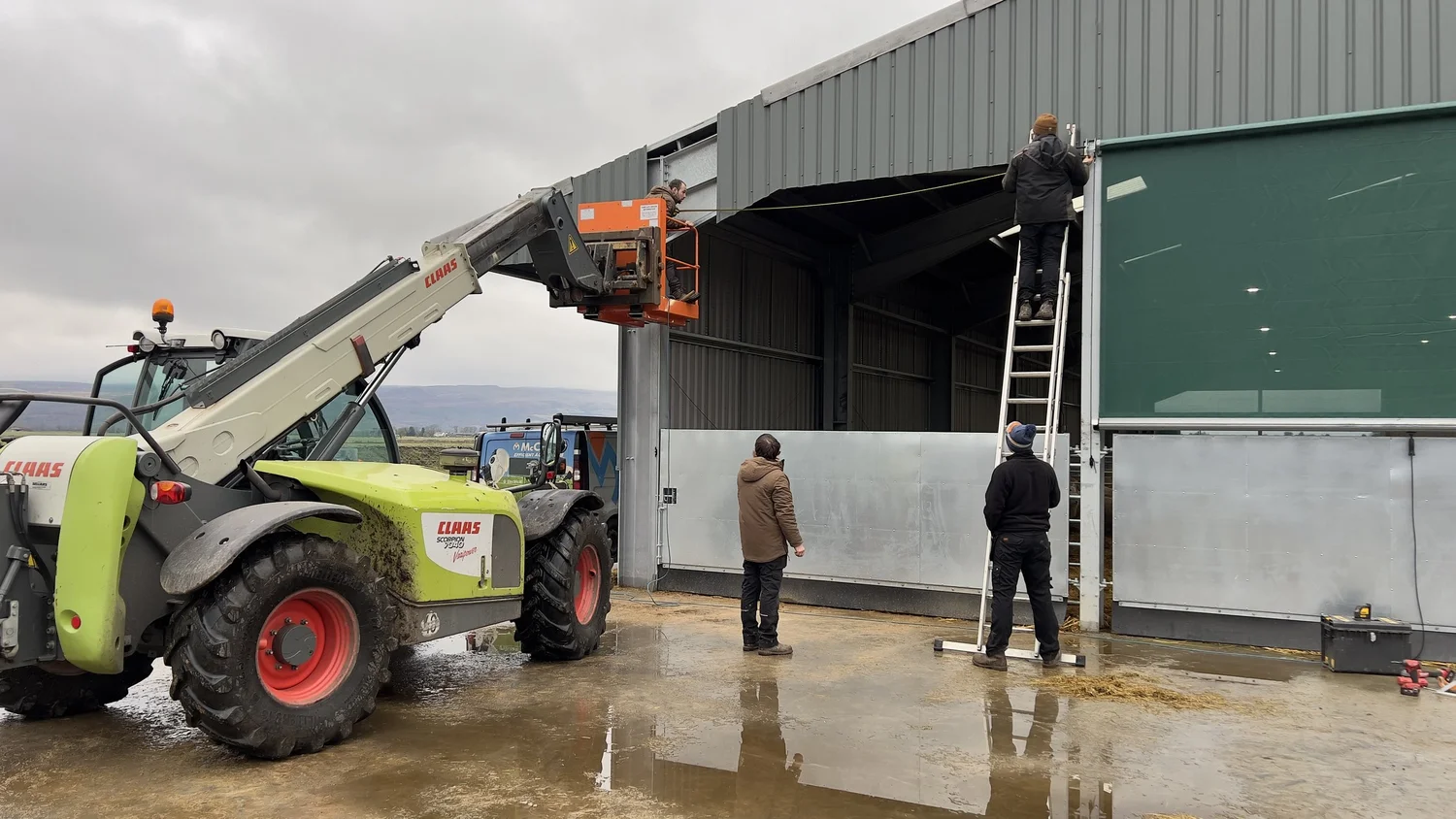
Screens, curtains and doors that stop wind and rain at the wall and still let air and daylight through. Surveyed, designed and fitted by our own engineers.
A Sealed Shed Is a Sick Shed
The instinct in a Scottish winter is to close the building up. Every sheet of solid cladding that goes on the side of a shed keeps the rain out and takes air and daylight with it, and a building that cannot breathe is where the coughing starts. The job is not to shut the weather out; it is to stop the wind and the rain at the wall while the air keeps moving.
That is what a mesh screen does, and it is why the answer is usually something you can open and close rather than something you fix in place. Which mesh, how much of the wall, and which elevations depends on where the building sits and what is in it — which is a survey, not a catalogue order.
Four Buildings, Four Different Problems
Rain Driving Into One Side
A prevailing wind that soaks the same bay every winter, while the rest of the shed is fine. Usually one elevation, not the whole building.
Calves in a Draught
The hardest balance in any building: enough air changes to clear the shed, without a cold draught at calf height. Wrong on either side and you pay for it.
A Shed That Is Too Dark
Solid cladding takes the daylight with the weather. Mesh puts a good deal of it back, which is worth more than most people expect.
Heat in the Summer
The same building that is too open in January is too still in July. Anything that can be rolled up is doing two jobs a year.
Every Building Is a Different Shape
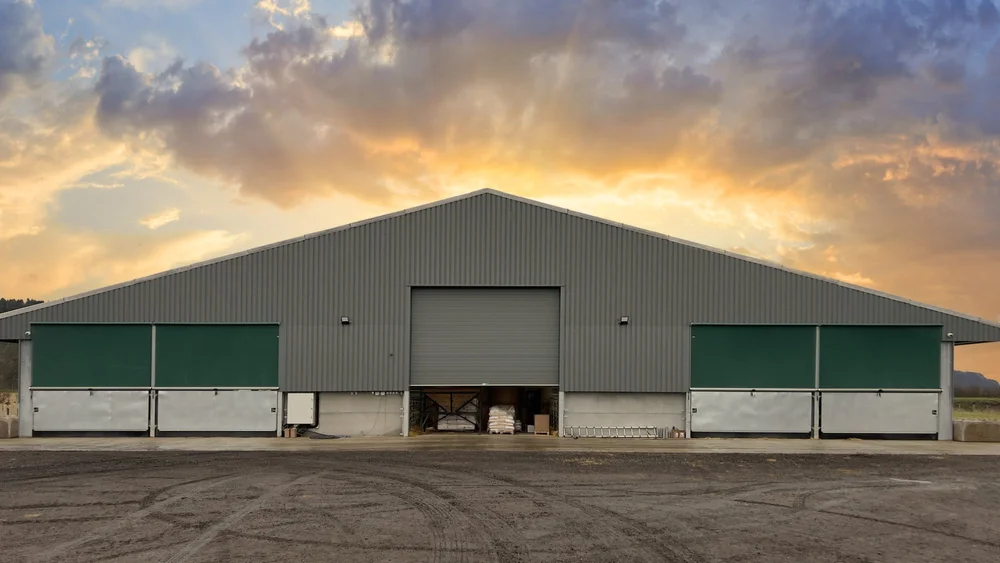
There is no standard size. Each screen is measured on site, made to that opening, and fitted by our own engineers.
Which is why a finished job looks like part of the building rather than something bolted onto it — and why the survey comes before the order rather than after it. This one is two elevations of a new shed near Stirling: screens down both sides of the roller door, the rest of the building left open.
We fit the Galebreaker range. The parts of it that come up most on Scottish farms are the clip-on and roller screens that replace or cover a section of wall, the door systems, and the controllers that let a screen move with the weather instead of waiting on somebody with a handle. There is shading and lighting in the range too, and silage protection, and CalfHub for calf housing.
Mesh comes in grades. The higher-performance M90 material has a smaller gauge hole and gives more weather protection for the same opening, which is what usually goes into calf housing; it comes in green, grey and black. Which grade suits your building is part of the survey — a mesh that is too tight is just cladding with extra steps.
Which Answer for Which Problem
| The problem | What usually goes on | Why |
|---|---|---|
| Driving rain on one elevation | Clip-on or roller screens on that wall only | Stops the weather where it is coming from without darkening the whole shed |
| Needs to change with the weather | Roller screens with a controller | Open on a still day, closed in a gale, without anybody climbing anything |
| Calf housing | Higher-performance mesh, sized to the building | Weather protection without the draught that causes the trouble |
| Too dark inside | Mesh in place of solid sheeting | Puts daylight back in |
| Wide opening to close | Door systems | A doorway that still works as a doorway |
| Air is not moving at all | This is a ventilation job, not a cladding one | See shed ventilation — fans and ducts move air, screens control what gets in |
Surveyed, Made to Size and Fitted by Us
An engineer comes out and looks at the building first — which way it faces, what is upwind, what stock is in it and what the air is doing on a still day. Screens are then measured for that opening, made to size, and fitted by our own team. We service them afterwards.
If the building also needs air moved rather than just weather stopped, that is shed ventilation, and plenty of sheds want some of both. One survey covers the two.
Questions We Are Asked
Will screens make my shed colder?
A mesh screen slows the wind and stops the rain while air still passes through it, so the building is drier and out of the draught rather than warmer. In livestock housing that is what you want: cold and dry beats warm and damp every time.
Can I fit them myself?
These are measured for the opening and made to size, so they are not an off-the-shelf item. Our engineers measure, fit and service them.
Do I have to do the whole building?
No, and usually you should not. Most jobs are one or two elevations — the side the weather comes from. Screening a wall that is already sheltered costs money and takes light out for nothing.
What is the difference between this and ventilation?
Screens and doors control what gets into the building. Fans and ducts move the air that is already in it. A low, still shed usually needs air moved; a wet, windy elevation usually needs the weather stopped; a lot of buildings want both, and one survey covers it.
How long do they last, and can they be repaired?
They are a working part of the building and they can be repaired and replaced panel by panel rather than wholesale. We service what we fit.
Can you work on a shed with stock in it?
Usually, yes. Most of these jobs are done on working buildings. We will say straight out if a job needs the shed cleared or a quiet window.
If the weather is getting into a building it should not be, the quickest way to settle it is to have somebody stand in the shed. Our engineers cover the whole of Scotland from Stirling, and there are counters at Ayr, Kinross, Lanark & Stirling.
Ask for a shed survey or call 01786 474 481. If something we fitted has stopped working, that is service and call-out.