
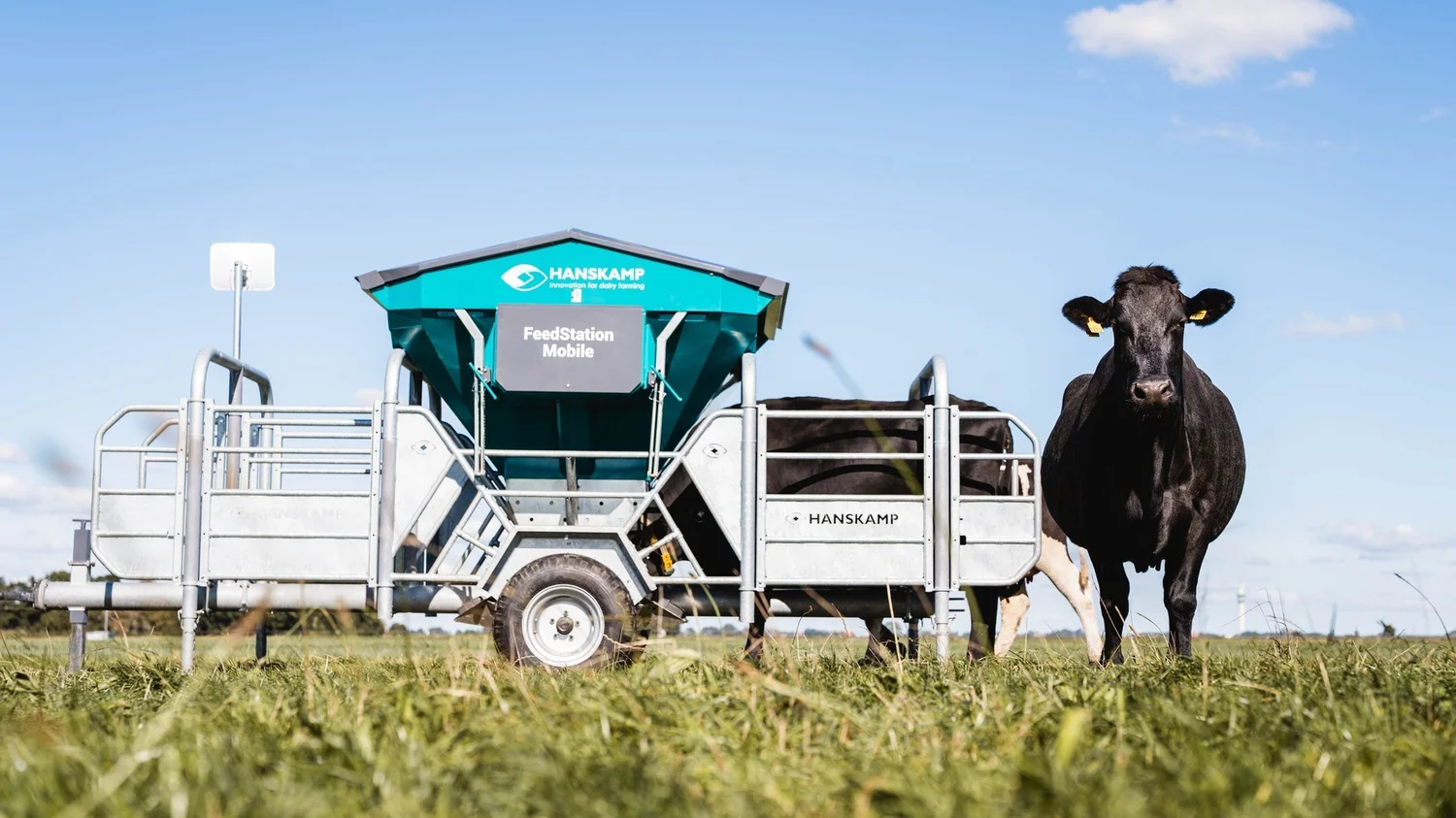
FeedStation Mobile: Individual Concentrate Feeding Out at Grass
A feeding station you tow into the paddock. It reads each cow as she walks in and gives her the concentrate ration she has been allocated — supplied, installed and serviced across Scotland by McCaskie Engineering.
See It Working at AgriScot 2026
Wednesday 18 November 2026 at the Royal Highland Centre, Ingliston, in AgriScot’s 25th anniversary year. The FeedStation Mobile will be on the McCaskie stand, with our dairy engineers on hand.
The Paddock Feeds Every Cow the Same
Grazed grass is the cheapest feed on any Scottish dairy farm, and nothing beats it for cost per litre. The difficulty is that a field has no idea which cow is standing in it.
The fresh-calved heifer working hardest for you gets exactly what the late-lactation cow gets. In the parlour you can only feed her for the few minutes she is standing there, and a flat feed rate either overfeeds the cows that don’t need it or shorts the ones that do. Both cost money — one in wasted concentrate, the other in litres you never see.
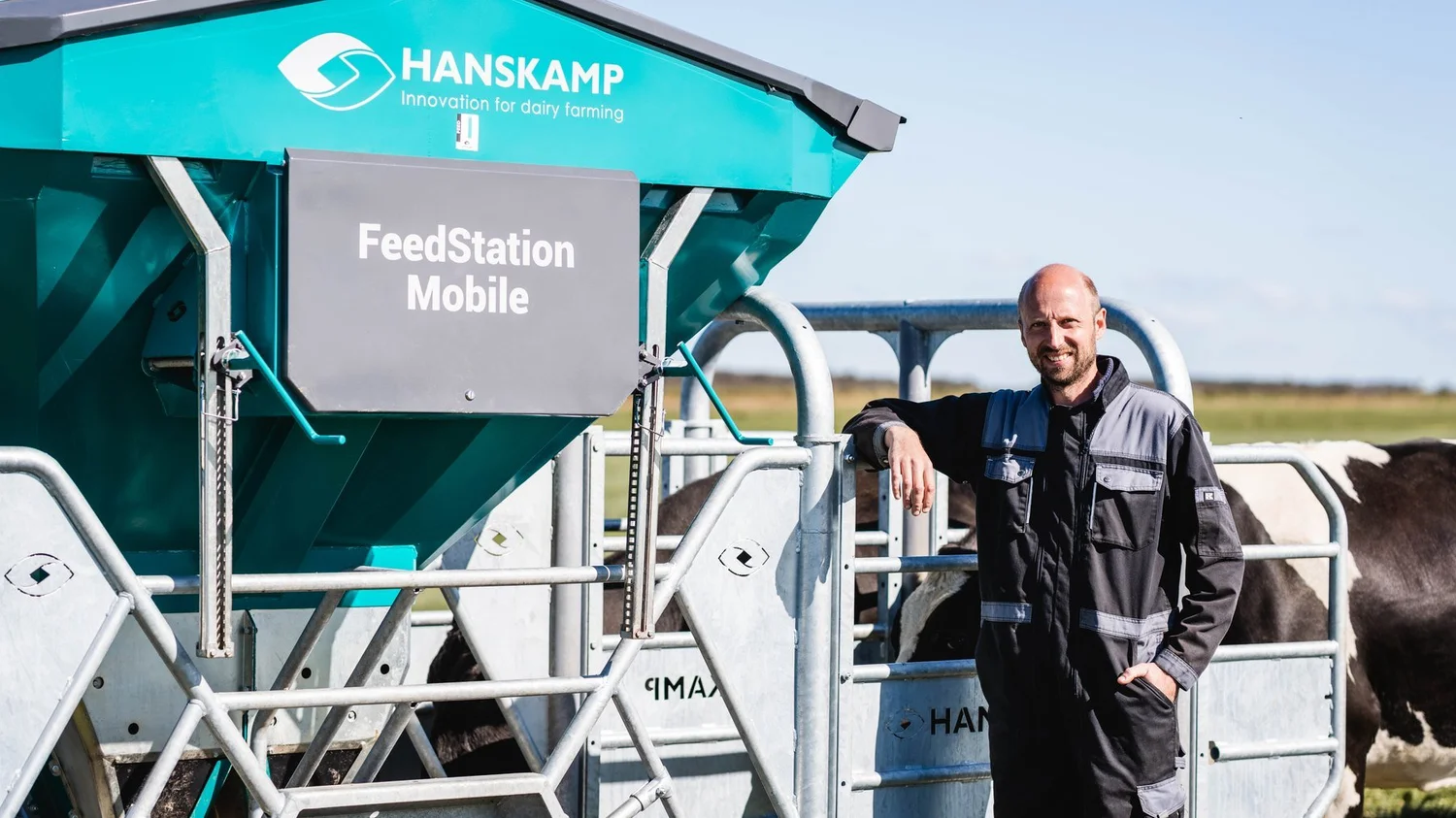
The FeedStation Mobile moves the feeding decision out to where the cows actually are. It tows into the paddock, reads each cow as she walks in, and gives her the ration she has been allocated — nobody else’s.
From the Tractor to Her Own Allocation
Tow it out, fill it, and let each cow identify herself. The feeding computer does the rest, and you can watch it from the house.
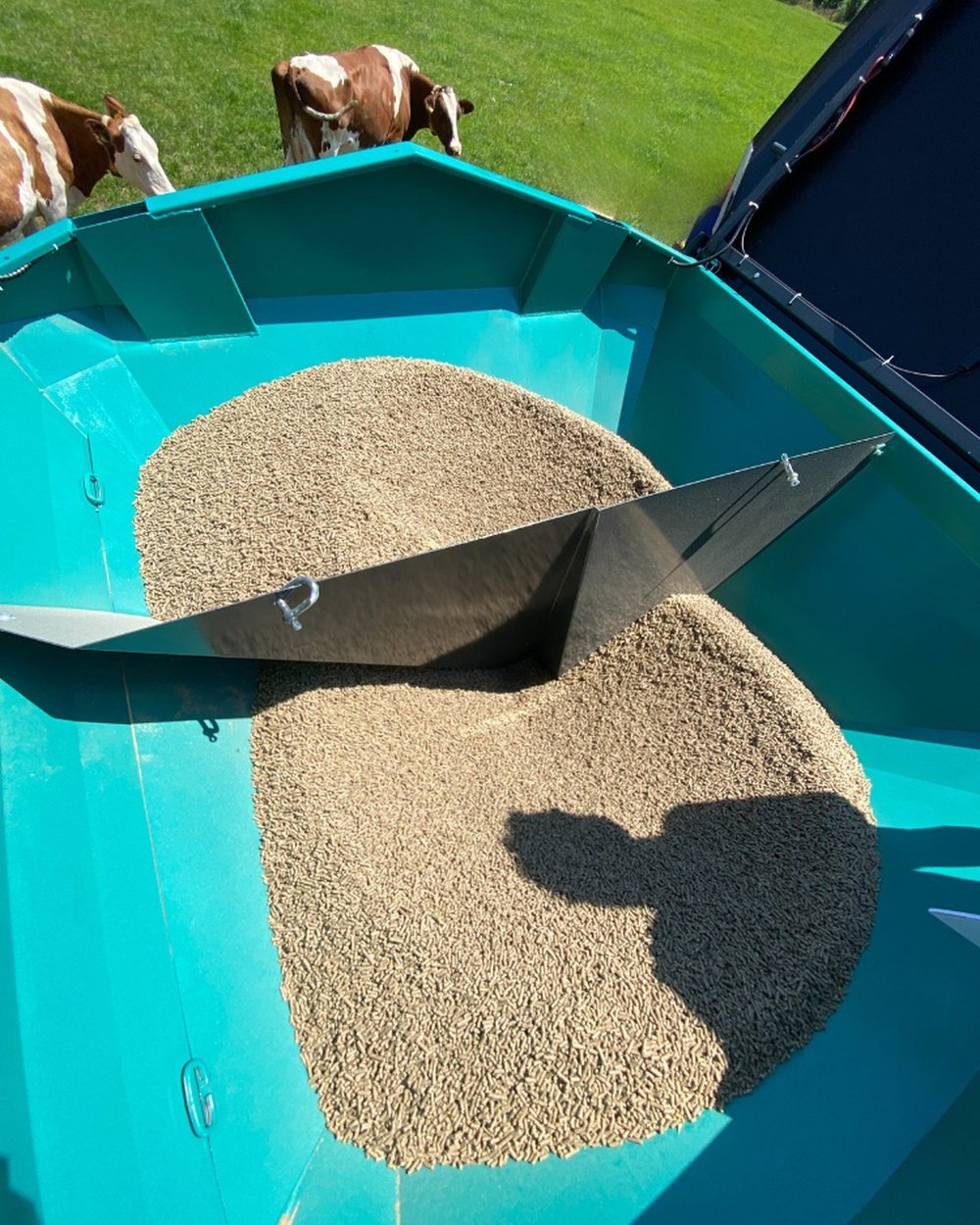
2,230 Litres in the Silo
Refill straight from the tractor with a fork or a telescopic loader — the same handling you already do.
The silo carries up to two different concentrates at once, so a high-yielder blend and a maintenance nut can both be on offer from the same machine.
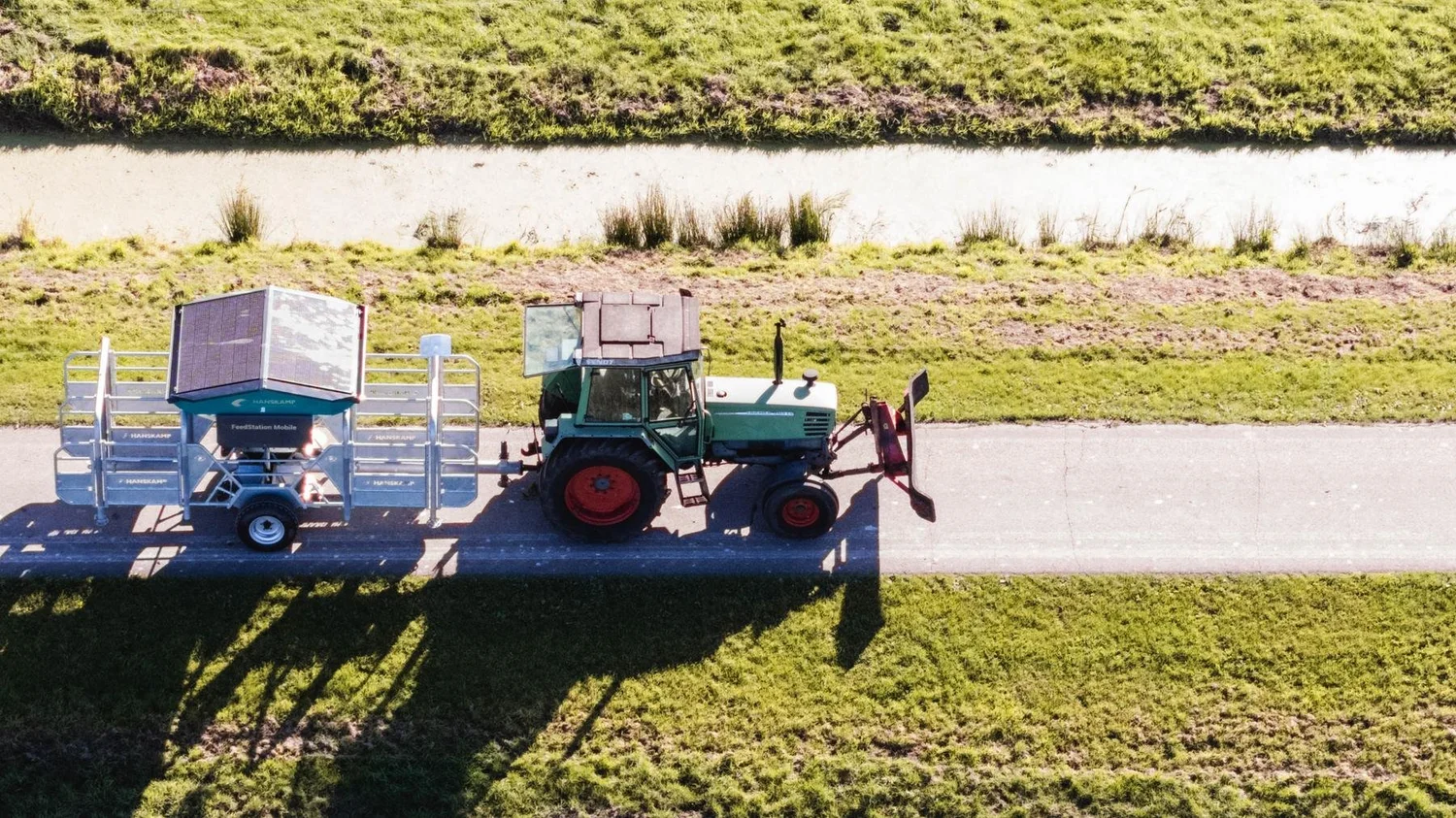
Tow It to the Paddock
The station sits on a rolling axle, so a tractor or a 4x4 puts it wherever the herd is grazing and moves it again when you shift them.
No groundworks, no power supply to run out, no permanent installation to regret.
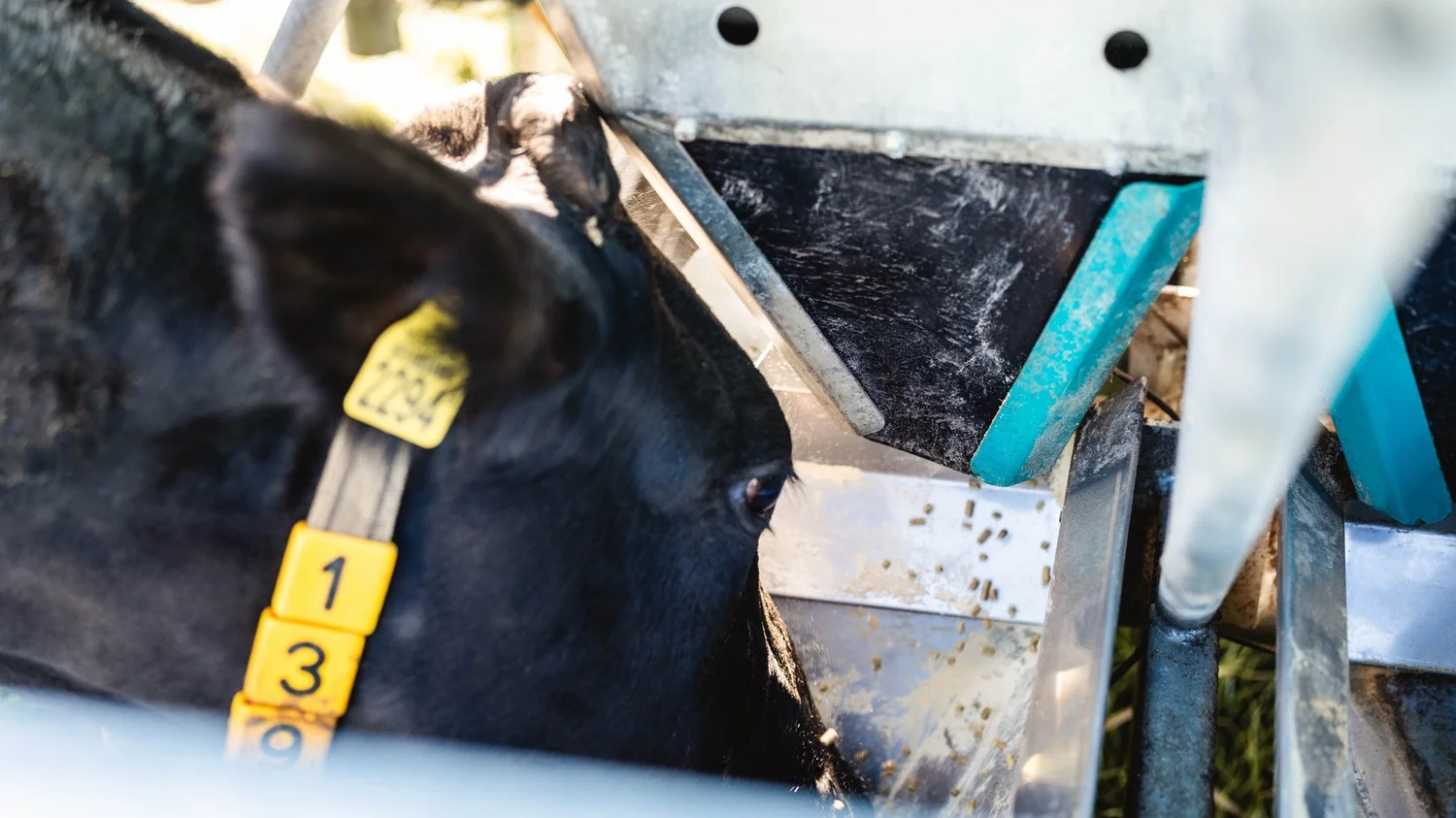
Read by Her Tag, Fed Her Own Ration
Identification is by RFID — an electronic ear tag or a neck transponder — so it works alongside the identification kit most herds already run.
There are two or four feeding places depending on the specification, with gates so a boss cow cannot stand and hog the trough. The Spider feeding computer holds a ration for every individual cow and doses it out in small feeds through the day rather than one lump — which is how concentrate gets used efficiently instead of passing straight through her.
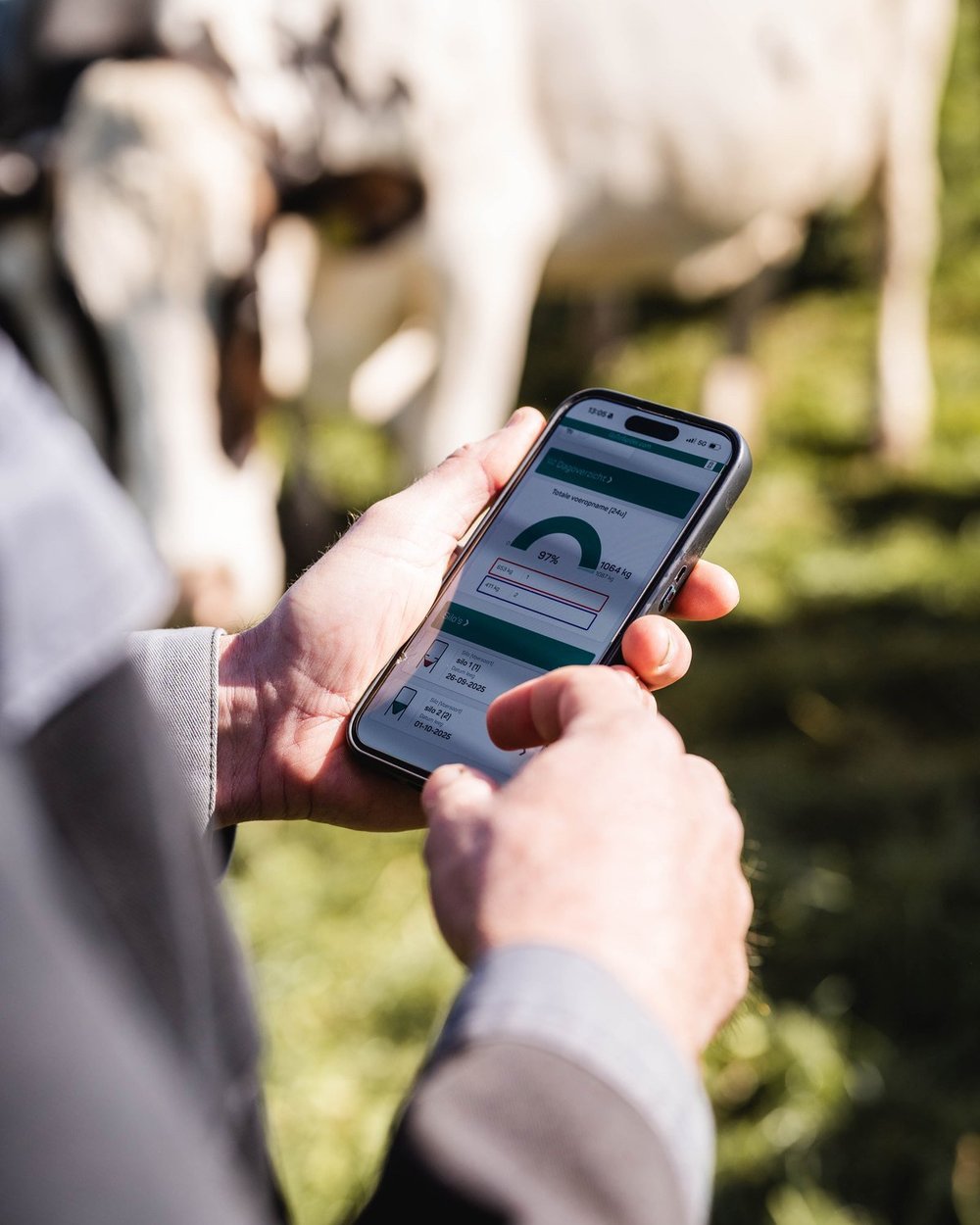
Watch It on Your Phone
Solar panels and onboard batteries run the station out in the field, and a 4G connection puts it on your phone, tablet or computer.
Change a cow’s allocation, or check what she actually ate, without walking the field. The Spider can also link to your herd management system.
What It Did on One Grazing Farm
Hanskamp published results from GAEC du Puy de Manzagol in France, where Sébastien Gourdoux and Damien Mouty milk 90 cows alongside 45 beef cattle, producing around 650,000 litres a year off 196 hectares — 90% of it grassland.
Their machine runs four feeding places, two concentrates and one liquid line. They compared two six-month periods for 70 lactating cows at the same physiological stage: one before individual supplementation, one after.
| Measure | Before | With FeedStation Mobile | Change |
|---|---|---|---|
| Average milk yield, litres/cow/day | 21.8 | 27.6 | +5.8 |
| Butterfat, g/kg | 39.5 | 42.0 | +2.5 |
| Protein, g/kg | 32.0 | 35.0 | +3 |
| Cows under 40 days in milk, litres/day | 29 | 33 | +4 |
| Concentrate per litre of milk, g | 266 | 240 | −26 |
| Margin per cow per day, € | 7.20 | 9.37 | +2.17 |
| Margin per cow per day, £ | 6.18 | 8.05 | +1.86 |
Across 70 cows that came to roughly €151 a day, €4,530 a month, or €54,360 over a year — about £130, £3,890 and £46,700 at the September 2026 exchange rate.
Read these as a French farm’s figures, in euros, on French feed and milk prices — not a promise of what will happen on a Scottish farm. What travels is the direction: more milk from less concentrate, because the concentrate goes to the cow that can turn it into litres.
The concentrate figure is per litre of milk, not per 1,000 litres: at these yields it works out at roughly 5.8 kg of concentrate per cow per day before and 6.6 kg after. The herd fed a little more cake and got a lot more milk — the efficiency gain is in litres produced per kilo fed, not in a smaller feed bill. Come and talk to us about what the sums look like on your own herd.
Source: Hanskamp, FeedStation Mobile Results Preview — GAEC du Puy de Manzagol, 2026. Sterling figures are converted at the mid-market rate current in September 2026 and are given for scale only.
Specification at a Glance
| Silo capacity | 2,230 litres |
|---|---|
| Feeding places | 2 or 4 |
| Feed types | Up to 2 concentrates |
| Power outdoors | Integrated solar panels and batteries — fully independent |
| Power indoors | Plugs into the mains for year-round use in the shed |
| Connectivity | 4G — phone, tablet or computer |
| Identification | RFID ear tags or neck transponders |
| Control | Spider feeding computer; links to herd management systems |
| Mobility | Rolling axle — towed by tractor or 4x4 |
| Refilling | Fork or telescopic loader |
| Build | Designed for outdoor use in all weathers |
| Season | Out at grass in summer, in the shed in winter |
Is It Right for Your Herd?
We would rather tell you now than after you have bought one.
It Earns Its Keep When…
- Grazing is a serious part of your system, not a token turnout
- You have a wide spread of yields in one grazing group
- Fresh-calved cows are grazing and you can’t feed them properly through the parlour
- Your parlour feeders are the limiting factor on concentrate accuracy
- Paddocks are away from the steading with no power to them
- You already run electronic ID on the herd
It Is the Wrong Machine When…
- Cows are housed all year and your existing out-of-parlour feeders are keeping up
- You feed a single TMR and have no intention of feeding cows individually
- The herd is small enough that parlour feeding already gets close enough
- Nobody on the farm wants to look at a screen — the machine is only as good as the rations you set
- Tracks and gateways won’t take a towed machine safely
Why Buy It From McCaskie
A feeding machine out in a paddock, twenty minutes from the steading, is only as good as the people behind it.
McCaskie has been supplying and servicing farm equipment across Scotland since 1957, and feeding and dairy engineering are our own department, not something we sub out.
- Delivered, sited and commissioned — our own engineers set the machine up in your paddock and run it with you until it is feeding correctly.
- Trained on your own cows — rations, groups and the Spider software, walked through with whoever will be running it day to day.
- Serviced by McCaskie Engineering — parts, servicing and back-up from our own engineering department, covering the whole of Scotland, with engineers on call 24/7. It is not handed to a third party.
- You speak to the person who fixes it — ring about a FeedStation Mobile and it is one of our engineers who deals with it.
- Nearly seventy years in the same job — a family firm that is still here when the machine needs something.
FeedStation Mobile Questions
What is an out-of-parlour feeder?
It is a feeding station that gives each cow her own concentrate ration away from the milking parlour, identifying her electronically as she enters. It lets you feed to yield without holding cows in the parlour any longer than milking requires. The FeedStation Mobile does the same job, but it can be towed out to the grazing paddock rather than being fixed in a shed.
How much feed does the FeedStation Mobile hold?
The silo holds 2,230 litres and can carry up to two different concentrates at once. It is refilled from a tractor using a fork or telescopic loader.
Does it need mains power in the field?
No. Integrated solar panels and onboard batteries run the station independently out at grass. Indoors it plugs into the mains, so the same machine can be used in the shed over winter.
How many cows can feed at once?
Two or four at a time, depending on the specification you choose.
How does it know which cow is which?
By RFID — either an electronic ear tag or a neck transponder. If your herd already carries electronic identification, it will normally work with what you have; we will check your tags before quoting.
Can I change a cow’s ration without going to the field?
Yes. The Spider feeding computer is reached over 4G from a phone, tablet or computer, so you can adjust allocations and see exactly what each cow has eaten from wherever you are. It can also be connected to a herd management system.
Can I see a FeedStation Mobile working before I commit?
Yes. The FeedStation Mobile makes its Scottish debut on the McCaskie stand at AgriScot on Wednesday 18 November 2026 at the Royal Highland Centre, Ingliston. If that date doesn’t suit, contact us and we will arrange a demonstration.
Who installs and services the FeedStation Mobile in Scotland?
McCaskie Engineering. Our own engineers deliver, site and commission the machine, train your staff on it, and take full responsibility for parts and servicing afterwards — it is not passed to a third party. We cover the whole of Scotland and our engineers are on call 24/7.
Who are Hanskamp?
Hanskamp AgroTech is a Dutch manufacturer based in Wehl, Netherlands, specialising in feeding and dairy equipment for grazing herds. McCaskie supplies and supports their equipment in Scotland.
See What It Would Do on Your Farm
Tell us your herd size, your grazing platform and how you feed now, and we will tell you honestly whether the FeedStation Mobile will pay on your farm.
Ring Stirling
01786 474 481. The engineering office at Springkerse, Stirling. Ask about the FeedStation Mobile or book a demonstration.
Email service
service@mccaskie.co.uk. For anything that can wait for a reply: a quote, a service booking, a question about something we fitted.