
The Silage You Made In May Decides How Many Cows Go Down In November
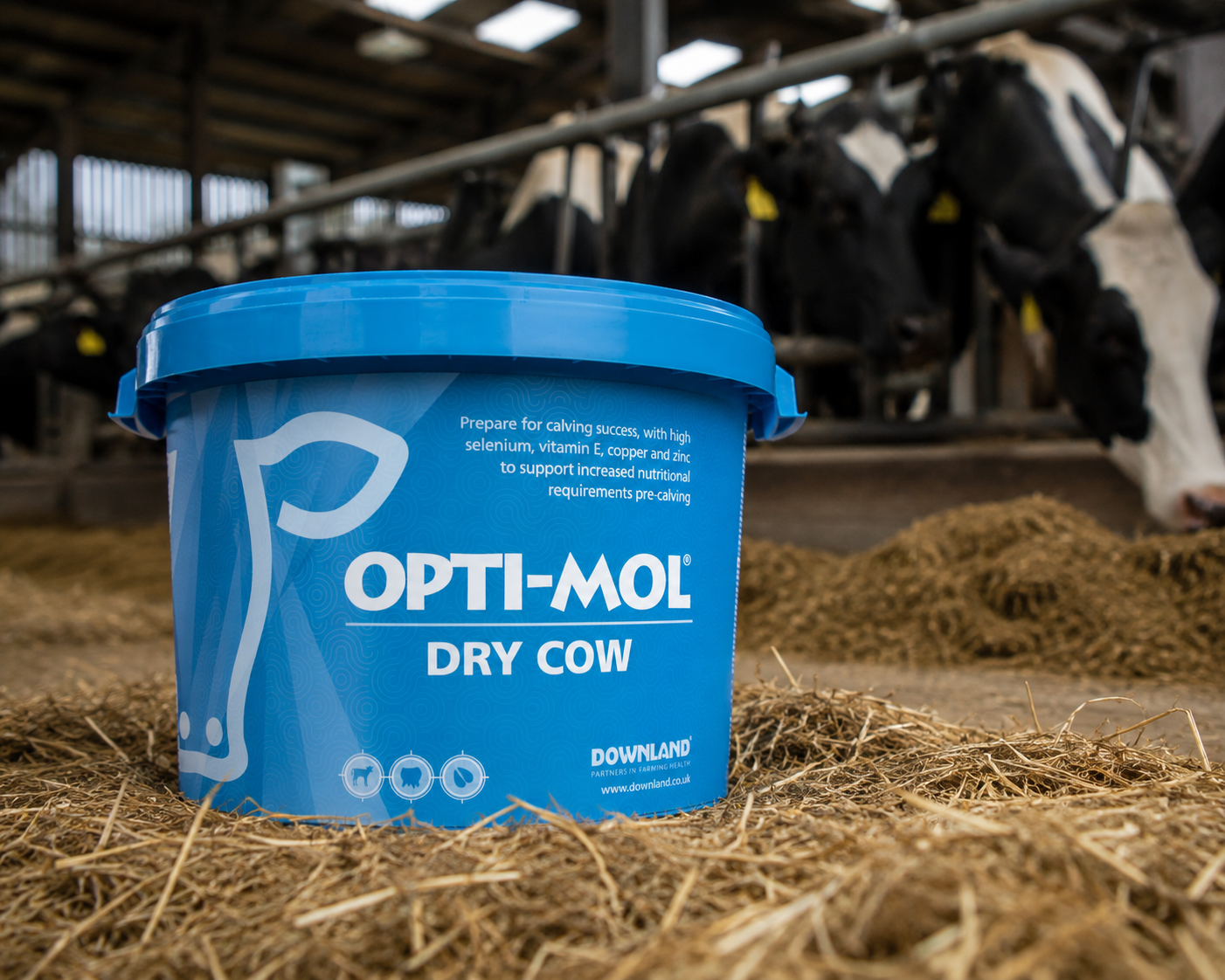
Opti-Mol Dry Cow
Prepare for calving success, with high selenium, Vitamin E, Copper and Zinc to support increased nutritional requirements pre-calving.
Scottish grass silage runs high in potassium, especially off ground that's had slurry. High potassium in a dry cow diet blocks her ability to mobilise her own calcium reserves when she calves. She's had the mineral. She still can't get at the calcium in her own skeleton at the moment she needs it most.
That's why milk fever cases cluster in housed, silage-fed dry cows — and why the cases you see are the smaller half of the problem. Subclinical hypocalcaemia doesn't put a cow down. It just makes her eat less, hold her cleansing, and pick up a displaced abomasum or a dose of ketosis three weeks later.
Where Downland Opti-Mol Dry Cow fits
Downland Opti-Mol Dry Cow is a low calcium, high magnesium mineral, vitamin and trace element bucket, formulated to be fed from six weeks pre-calving.
Vitamin E — 1,500 iu/kg, a supra-nutritional level, for thrifty calves and immunity against mastitis
Copper — 2,000 mg/kg, including a protected form, to support fertility post-calving
Zinc — 3,000 mg/kg, including a protected form, for feet and teat health
Selenium — high levels including protected selenium, to reduce retained cleansings and infections
Vitamin B12 — added, to support energy metabolism
25kg bucket, 40 per pallet. Ad-lib forage must always be available.
⚠️ Contains copper — not suitable for sheep.
Why low calcium and high magnesium is the right way round
It reads backwards, and it's the bit worth understanding. Feeding a dry cow plenty of calcium keeps her absorbing it passively from the gut and lets the mobilisation machinery go idle. Keep calcium low pre-calving and she stays primed to pull calcium from her own skeleton — which is exactly what she has to do the day she calves.
Magnesium is what makes that possible. Skeletal calcium is mobilised through parathyroid hormone, and that hormone doesn't work properly if magnesium status is marginal. Magnesium also has no meaningful body store, so it has to arrive daily.
That's the whole design of this bucket in one sentence: low calcium to keep her ready, high magnesium so she can act on it.
Is a bucket the right answer for dry cows?
It depends on your system. For outwintered suckler cows, small dry groups, or all-year-round herds without a separate dry cow TMR, free-access is a practical, low-labour way to get consistent mineral in. For a tight block-calving herd already running a full anionic transition diet, a bucket isn't a substitute — intake varies cow to cow, and transition is where precision pays most.
If you're unsure which camp you're in, have that conversation before housing rather than after the first cow goes down.
Talk to us before the cows come in
Available from Ayr, Kinross, Lanark & Stirling, or through your local McCaskie sales rep. We can also arrange forage analysis — for dry cows, knowing your silage potassium is worth more than any bucket you buy.
Established 1957. Three generations. Same advice: test first, then feed.
Frequently asked questions
How long before calving should dry cows get this bucket?
Downland specify feeding from six weeks pre-calving. That covers the full dry period on most systems and gets minerals in well before the close-up phase when calcium demand rises sharply.
Can I feed a standard cattle mineral bucket to dry cows instead?
Not ideally. Standard cattle minerals are often high in calcium, which is the opposite of what a dry cow needs. High calcium pre-calving can increase milk fever risk rather than reduce it.
Can sheep use the same bucket?
No. Opti-Mol Dry Cow contains 2,000 mg/kg copper and is not suitable for sheep. Sheep tolerate copper poorly and accumulation can be fatal — keep these buckets away from any shared or adjacent grazing.
Links:Downland: feed bucket vs mineral bucket · Our Downland range · Feed buckets vs mineral buckets · Agriculture at McCaskie
#DryCowManagement #MilkFever #DairyFarming #ScottishFarming #Downland