
The Six Weeks Before The Tups Go Out Decide Next Spring's Lambing
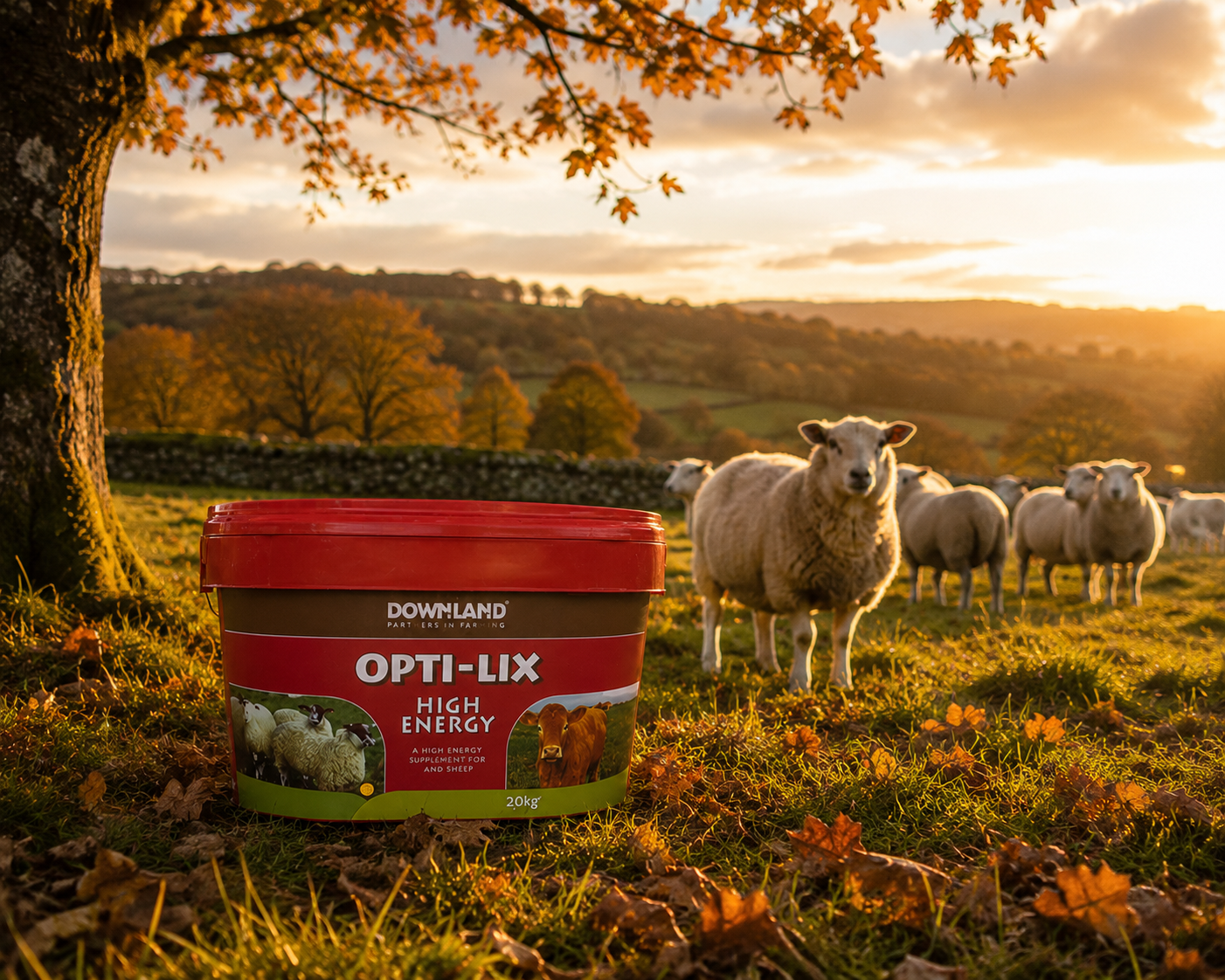
Opti-Lix High Energy
Every scanning percentage you'll get next winter is being set right now, in a field you probably drove past this morning without a second thought.
Ewes that go to the tup in the right condition cycle tightly, hold more eggs and give you a result you can plan around. Ewes on the back foot give you singles, stragglers and a long, expensive lambing. The difference is made in the four to six weeks before the raddle goes on — and at the end of August, that window is opening.
The trouble is that autumn grazing rarely does the job alone. Quantity holds up for a while but quality falls away, sugars drop, protein gets patchy, and trace element levels in Scottish grass are variable at the best of times.
What Opti-Lix High Energy brings
Downland Opti-Lix High Energy is a molassed feed lick for ewes, rams and lambs — and it suits cattle too. The figures worth knowing: 16 MJ ME/kg DM, 12% protein, 35% sugars, plus a full complement of vitamins, minerals and trace elements including protected zinc and selenised yeast. Available in 20kg and 80kg buckets.
That sugar figure looks like a palatability trick. It isn't. The rumen runs on microbes, and microbes need fermentable energy to break down fibre. Feed them a readily available sugar source alongside forage and they work harder — so your ewes extract more from the grass and silage they're already eating. The bucket does two jobs: it adds nutrition, and it improves what they get from everything else.
The trace elements matter for a quieter reason. Cobalt, selenium, iodine and zinc deficiencies rarely announce themselves. There's no clinical case — just tups working less keenly, ewes cycling late, lambs that never quite thrive. You find out at scanning, by which point the money's spent.
Save this — your tupping timings
2 weeks pre-tupping, then feed for around 8 weeks — supports condition for strong oestrus and successful implantation
Mid pregnancy — placental development happens now, and a small placenta means weaker lambs and less colostrum
Pre- and post-lambing — demand peaks, so keep going
Intakes: up to 100g/head/day for sheep, 500g/head/day for cattle
Siting: over the grazing, away from the water trough — you want stock walking the field, not standing in one corner
Don't forget the tups. They're half your lamb crop and they lose condition fast during work
Cattle too
Don't let the sheep framing put you off — it suits suckler cows and growing cattle holding condition through a poor back end. If your concern is staggers risk rather than energy, ask about Opti-Lix Cattle Magnesium instead. Different product, different job.
Come and talk to us
Available from Ayr, Kinross, Lanark & Stirling, or through your local McCaskie sales rep with your next delivery. Our staff are AMTRA-qualified SQPs, so if you're unsure whether you need a high-energy lick, a mineral bucket, or a forage analysis first, that's a conversation worth having before the tups go out rather than after scanning.
Established 1957. Three generations. Same advice: get the basics right, early.
Frequently asked questions
How long will one bucket last?
At the maximum 100g/head/day, a 20kg bucket gives 200 ewe-days — around eight days for 25 ewes. Actual intake is usually lower and varies with grazing quality, so plan on a range and follow the label allocation rate.
Is Opti-Lix High Energy safe for sheep?
Yes. It contains no added copper, unlike several cattle-specific buckets in the Downland range. Always check the label before putting any cattle bucket where sheep can reach it.
Can I feed it to cattle at the same time?
Yes, it's formulated for cattle as well as sheep, at up to 500g/head/day. On mixed grazing that makes it a simpler option than running two different products.
Links: Downland on mid-pregnancy nutrition · Our Downland range · 5 Steps to Lambing Success · Feed buckets vs mineral buckets
#Tupping2026 #SheepFarming #BodyCondition #ScottishFarming #Downland