
Gartclush Farm, Bannockburn: Robotic Milking Since 2009
The Brisbanes replaced a 40-year-old herringbone with two Fullwood Merlin robots in spring 2009, added a third in July 2010, and moved to milking three times a day.
Gartclush Farm, Bannockburn
| Farmers | John and Stephen Brisbane |
|---|---|
| Location | Bannockburn, Stirling |
| Herd | 180 Holsteins |
| Milking system | Fullwood Merlin robots |
| Installed | March 2009, a third robot in July 2010 |
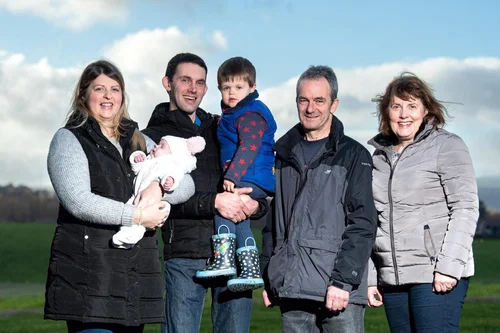
A Century at Gartclush
The Brisbane family has farmed at Gartclush for over a century. Before the robots, the herd had been built up to 165 cows, milked through the farm’s 40-year-old 12-point herringbone — a labour-intensive job that needed full-time staff and a part-time dairyman alongside John and his son Stephen.
The decision was as much about the next generation as the parlour. In the family’s words: “The primary reason for installing the robots was to modernise the farm’s milking facilities and to plan for Stephen’s long-term future in the industry. Increased yields, being less reliant on outside labour as well as a more relaxed and flexible lifestyle for ourselves have been added bonuses.”
2009: Two Robots, Fewer Cows, the Same Milk
Two Fullwood Merlin robots went in in spring 2009, and the herd came down by 30 cows to 135 at the same time. John explained the thinking: “That is the maximum comfortable number of cows we felt the two machines could handle. At first we were concerned that we would see a big drop in milk production but we are actually producing the same amount of milk from fewer cows.”
The robots let John and Stephen move to milking three times a day, and at the time milk output rose from 29 kilos per cow per day to an average of 32.5 kilos, with milk quality improving too.
The bigger change was to the working day. “We no longer need to employ any full-time staff which means that the robots are effectively paying for themselves. At the same time, we no longer have to spend five hours in the parlour each day and don’t have to get up as early as we used to. That gives us more time to manage other aspects of the farm and means we are less tired and therefore more productive.”
Housed All Year, Fed to Yield
Housing the cows all year changed the feeding as well as the milking. “The cows are now housed all year round which not only allows for more frequent milking, but also allows us to feed a more consistent ration, resulting in a more level production which is important to our milk purchasers Graham’s Dairies.”
The cows are fed a complete diet of baled grass silage, wholecrop peas and crimped wheat, with cake fed through the robots’ in-built feeders. Butterfat and protein went up, and with them the milk price. The robots do the rationing: “We have more control over what each cow eats as the cake ration is automatically adjusted by Crystal, the Fullwood herd management software. A larger or smaller ration is dispensed according to how much each cow is producing and where she is in her lactation.”
2010: A Third Merlin
After almost two years of robotic milking, a third Merlin went in in July 2010, so cow numbers could rise to 180 milkers.
“Expanding the herd by 50 cows will only mean an additional 15 minutes of extra work in terms of feeding and bedding but will allow us to increase milk output by up to 30 per cent.”
Stephen Brisbane
Back for the Ventilation
In November 2021 our engineers were back at Gartclush to fit Hydor HV belt-driven fans — the range we now fit under the Elta name. Moving air through the housing is about cow comfort: it helps against pneumonia and heat stress, which shows up in production. Ventilation.
Thinking About Robots?
Our engineers are on call 24 hours a day, seven days a week. If you are weighing up robots for your own herd, start with how robotic milking works, or ring Stirling.